
Rhipsalis pachyptera Pfeiff.
Images | Description | Publications | Reduced Synonyms
Bonn 5757, East of Blumenau, Santa Catarina, Brazil – material sampled, Phylogeny and evolution of the epiphytic Rhipsalideae (Cactaceae), Nadja Korotkova, Ph.D. Thesis, 2012
Original collection was attributed as R. aff. crispata and pictured in The New Cactus Lexicon Illustrations, D. Hunt, 2006 as R. crispata, determined to be R. pachyptera at a later date.


Bonn 5758 – material sampled, Phylogeny and evolution of the epiphytic Rhipsalideae (Cactaceae), Nadja Korotkova, Ph.D. Thesis, 2012

A 60, Ilha de Santa Catarina, Florianópolis, Brazil, on the shore of Lake Peri

Domingos Martins, Espírito Santo, Brazil

Seed grown from A 60, Ilha de Santa Catarina, Florianópolis, Brazil, on the shore of Lake Peri
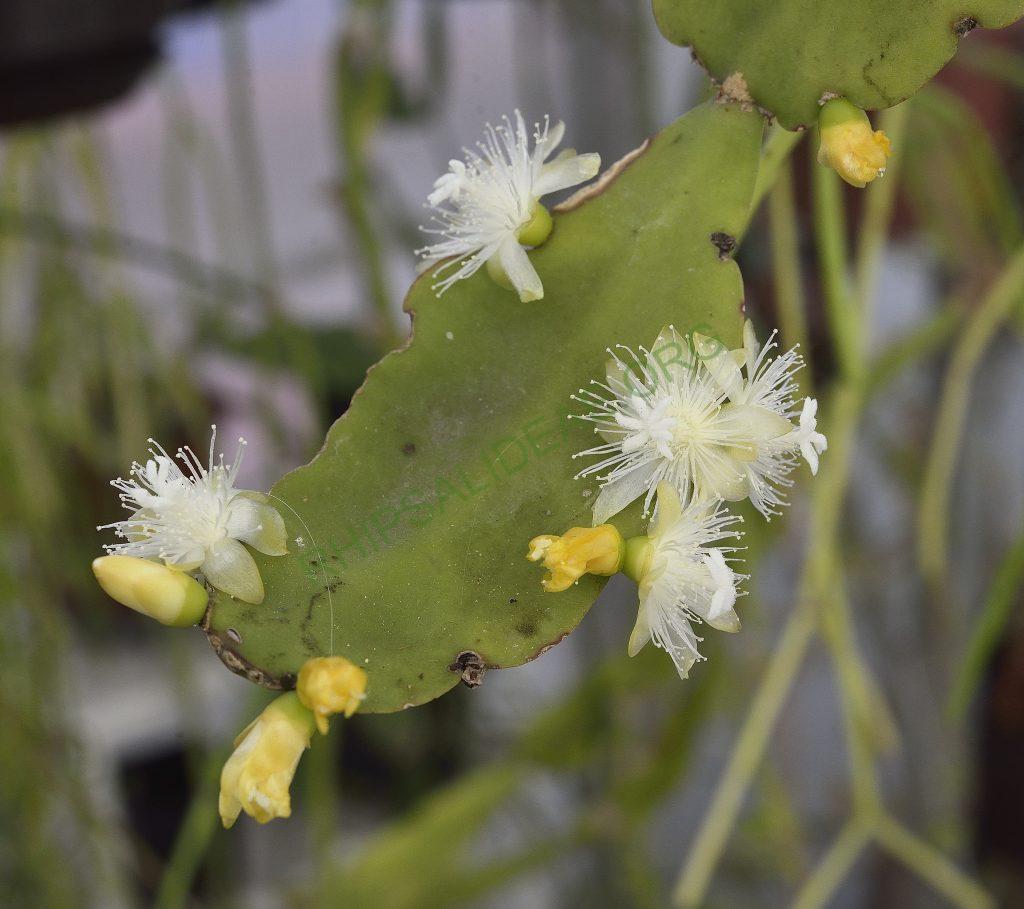
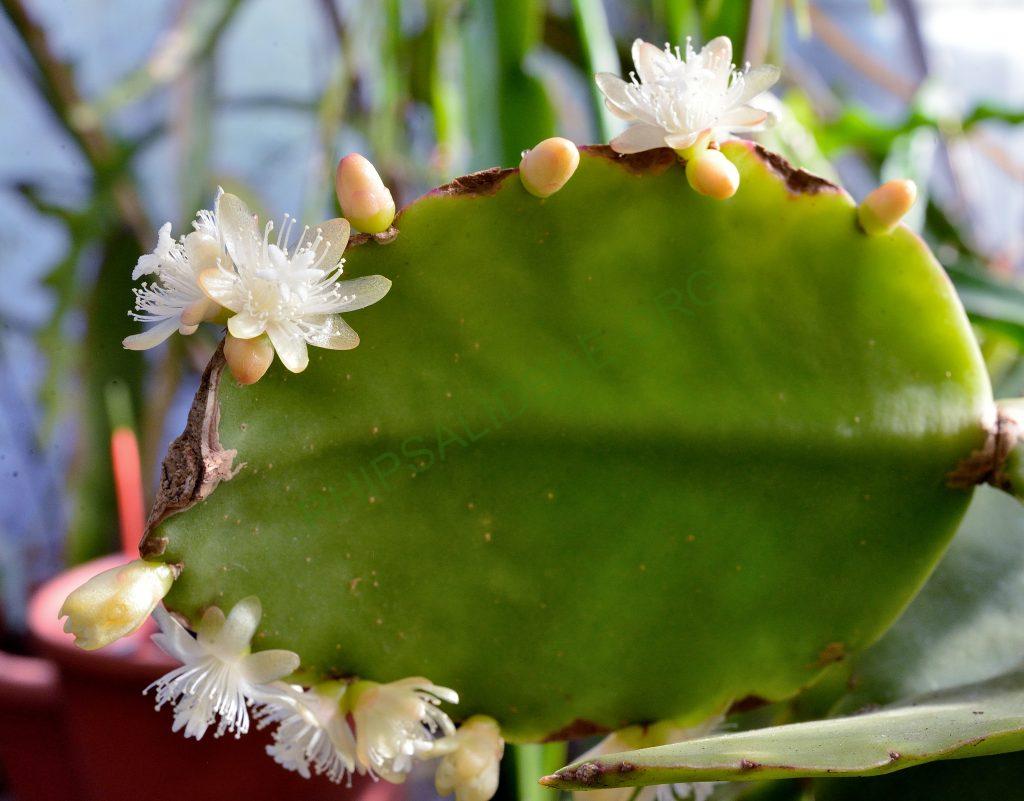

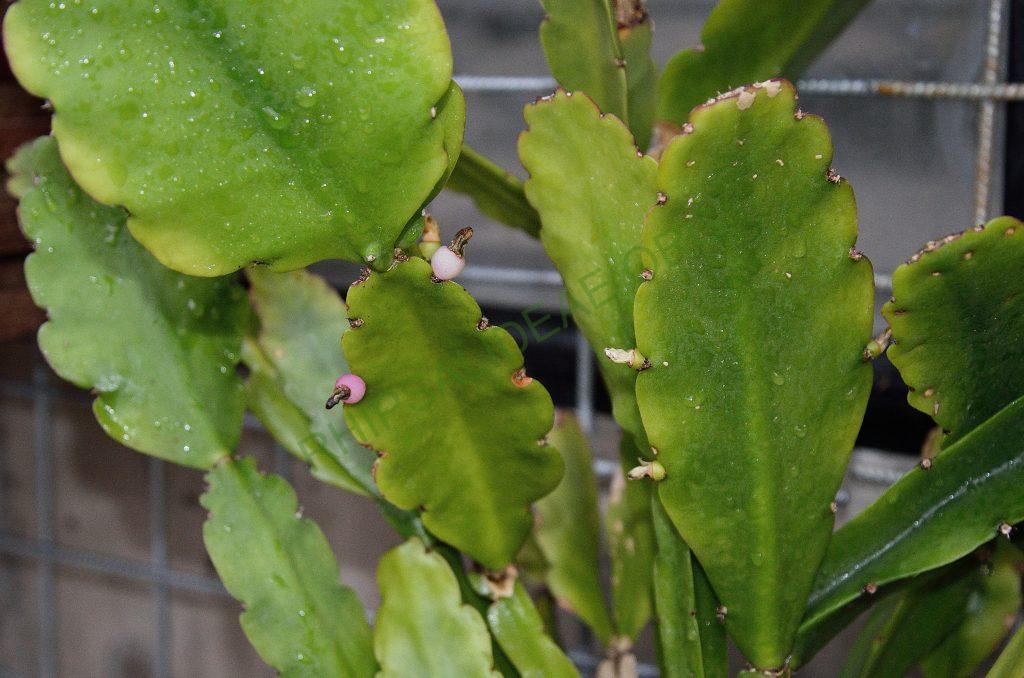
Paraty, Rio de Janeiro, Brazil

Poço da preguiça, Serra dos Órgãos, Rio de Janeiro, Brazil


Paraty, Rio de Janeiro, Brazil


Island of Bahia, Bahia, Brazil, ex. Lyon Botanical Garden
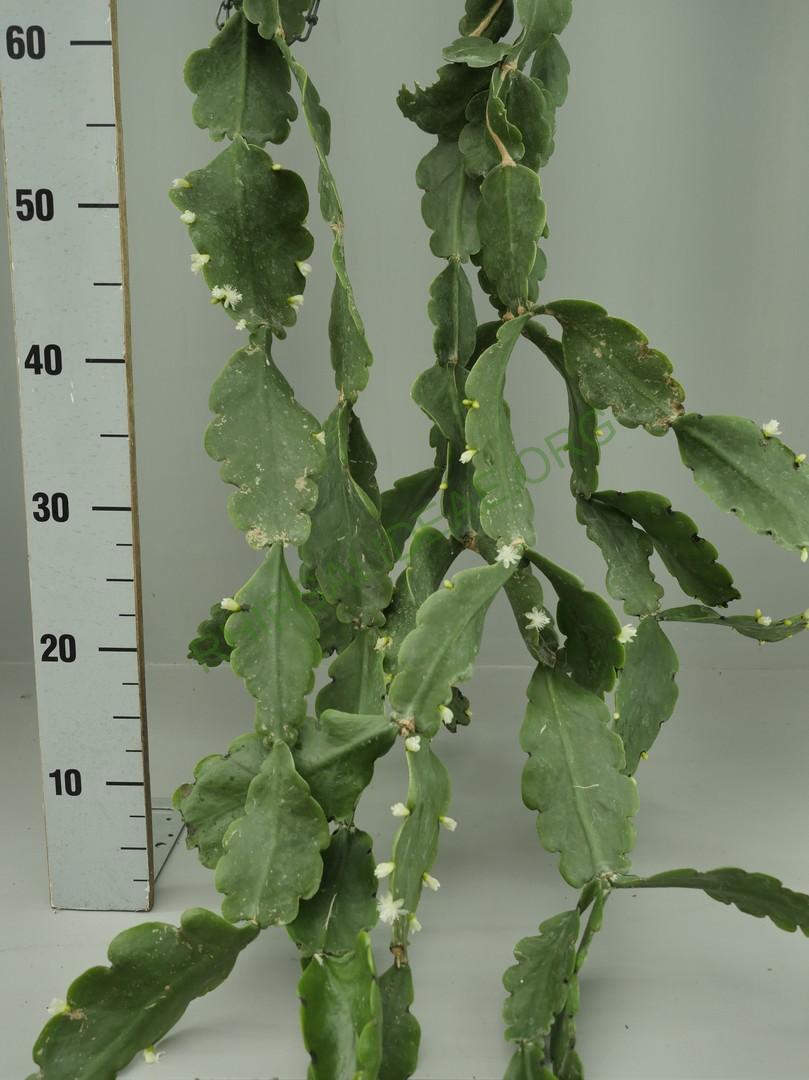
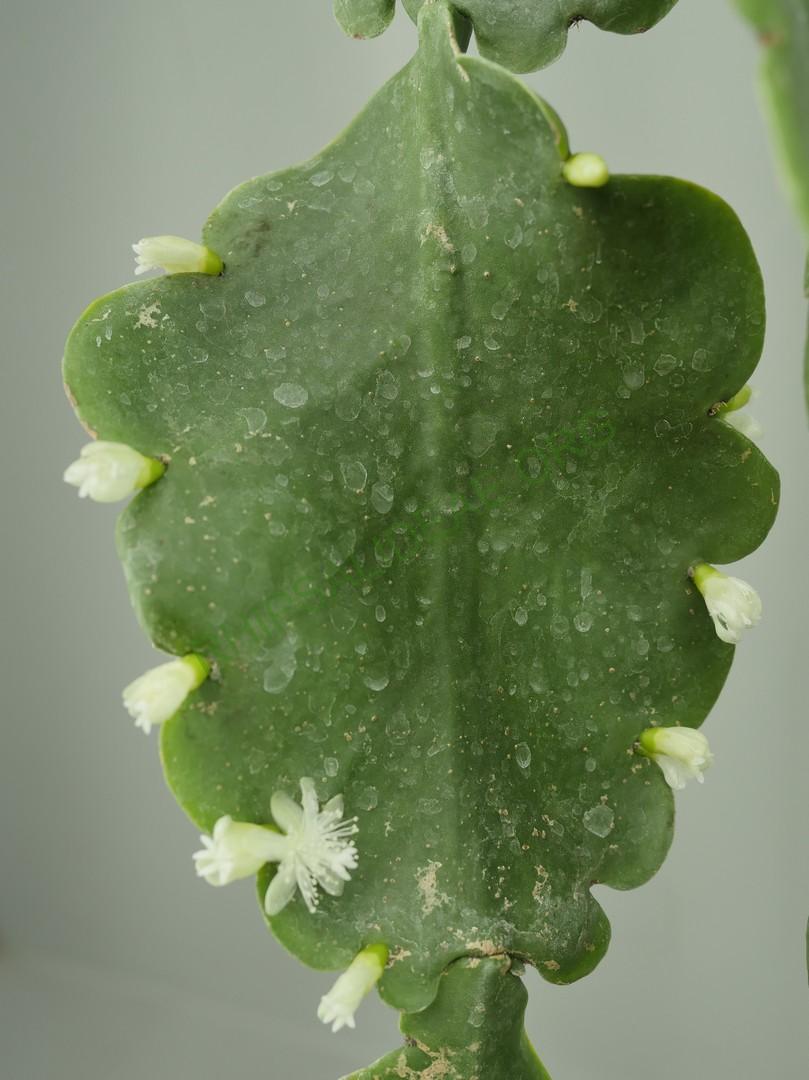
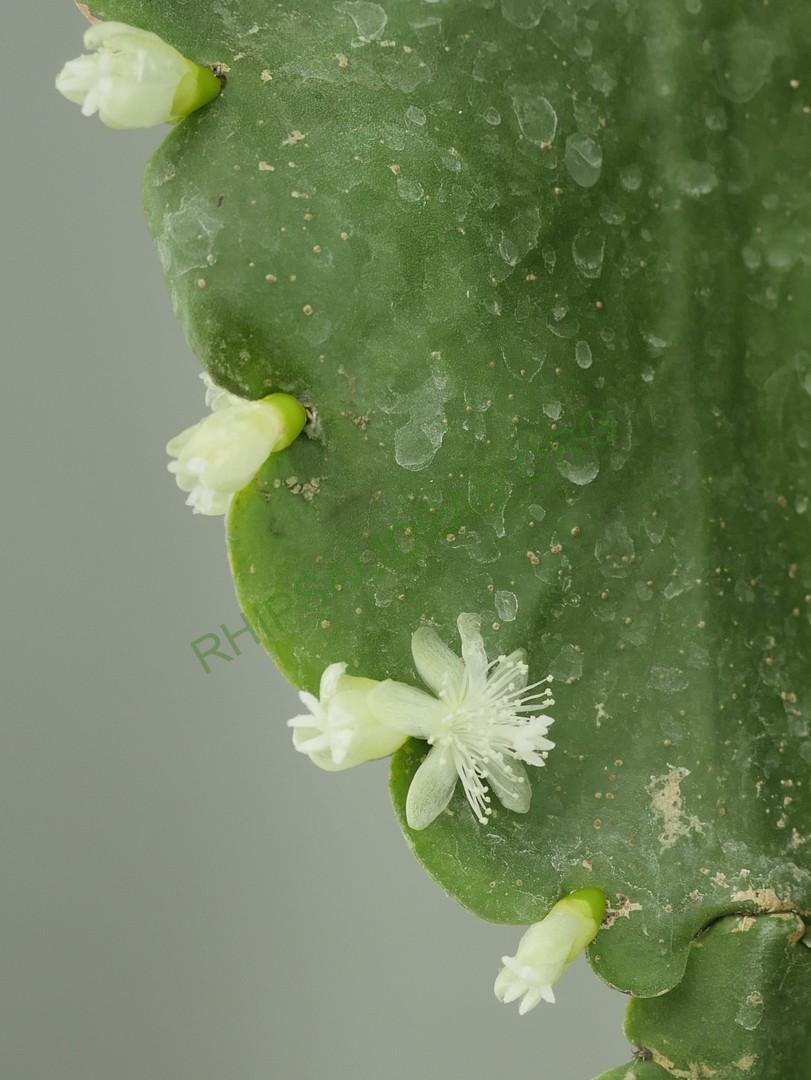
Camburi on the coast, border between Rio de Janeiro and São Paulo, Utrecht University Botanic Gardens, ex. Gerardus Olsthoorn


Unknown clone


Unknown clone


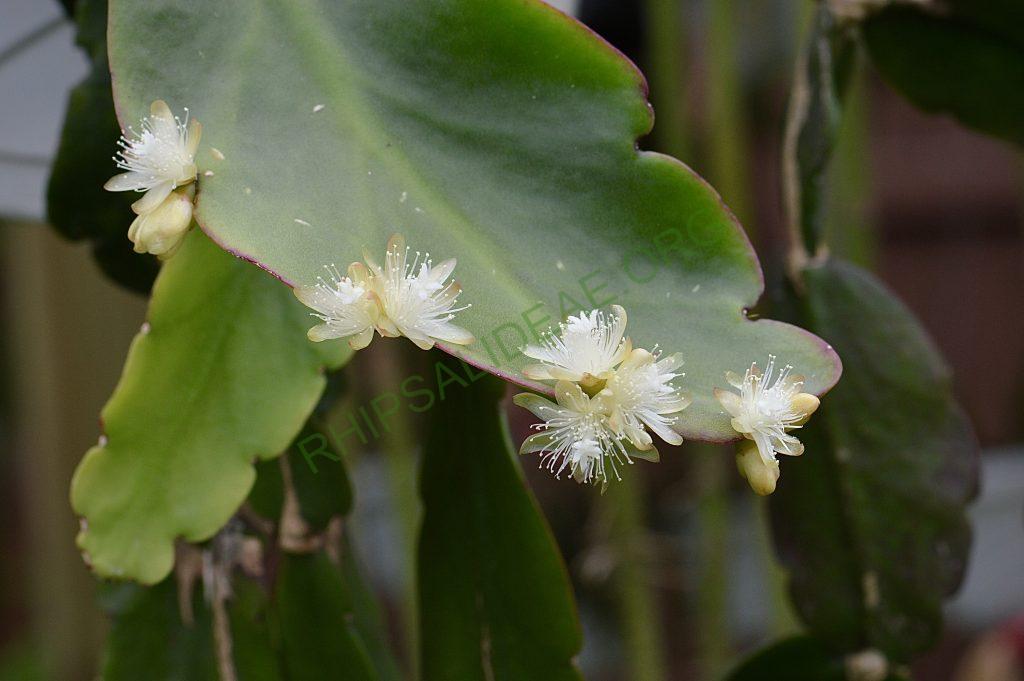
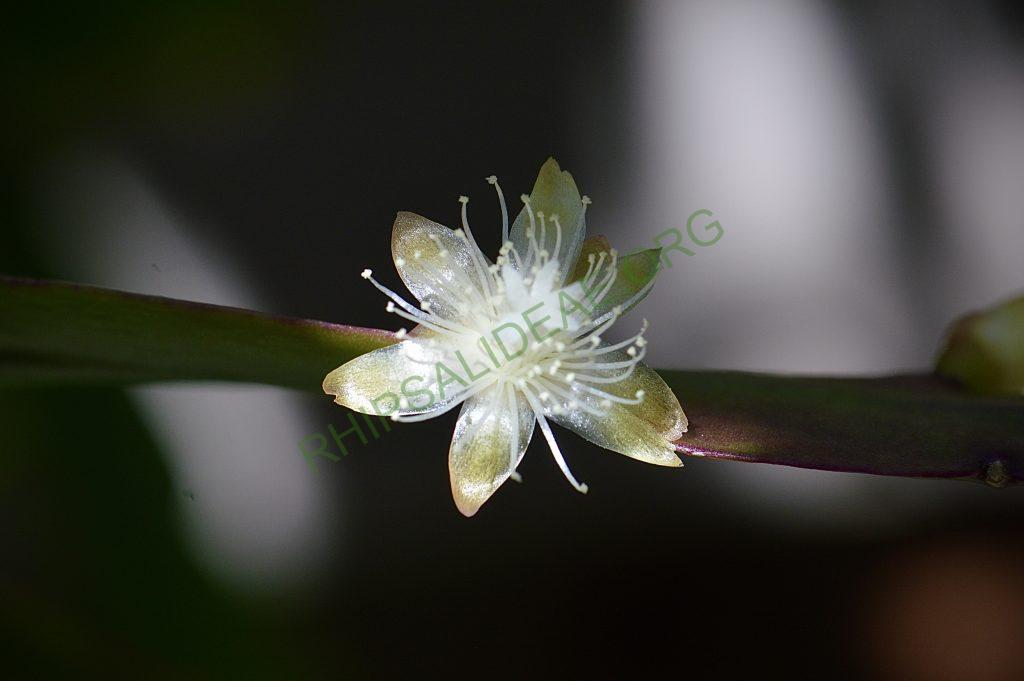


Unknown clone

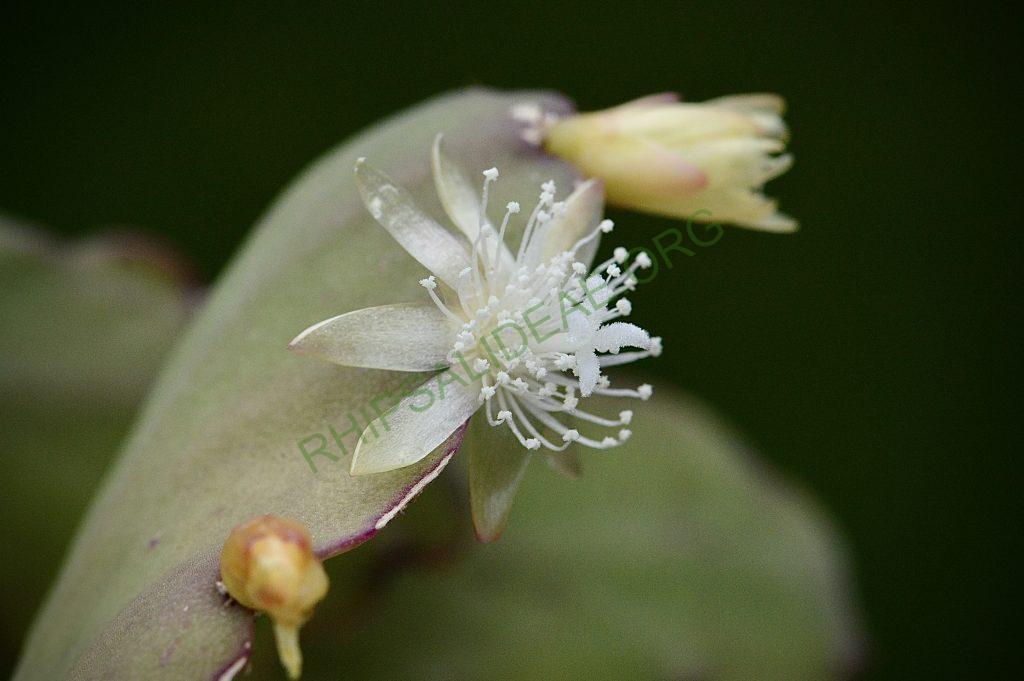

Unknown clone

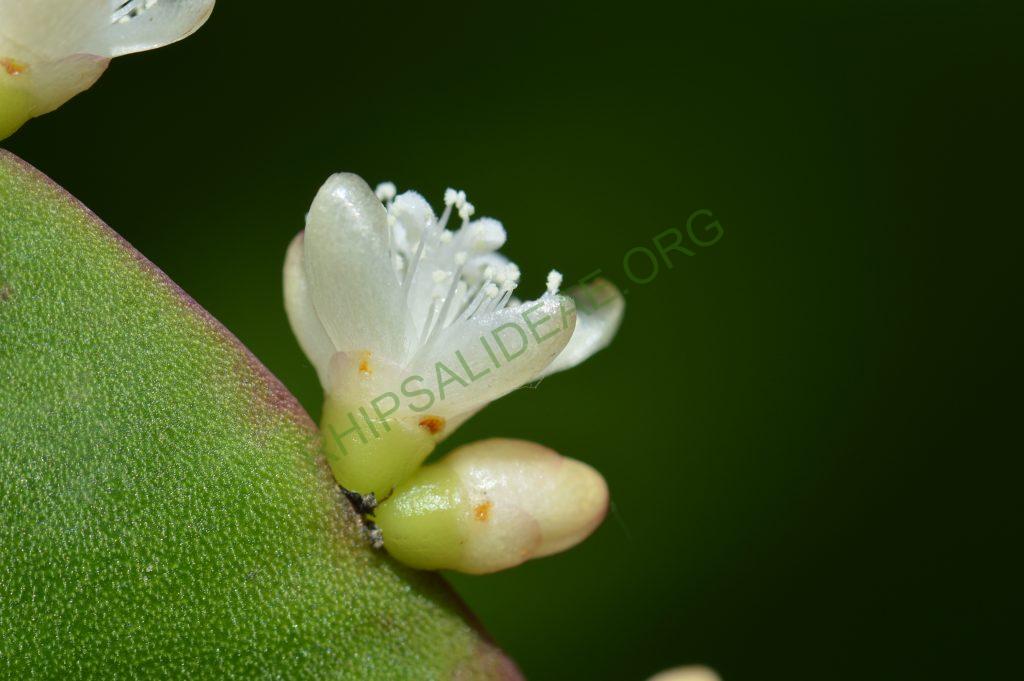

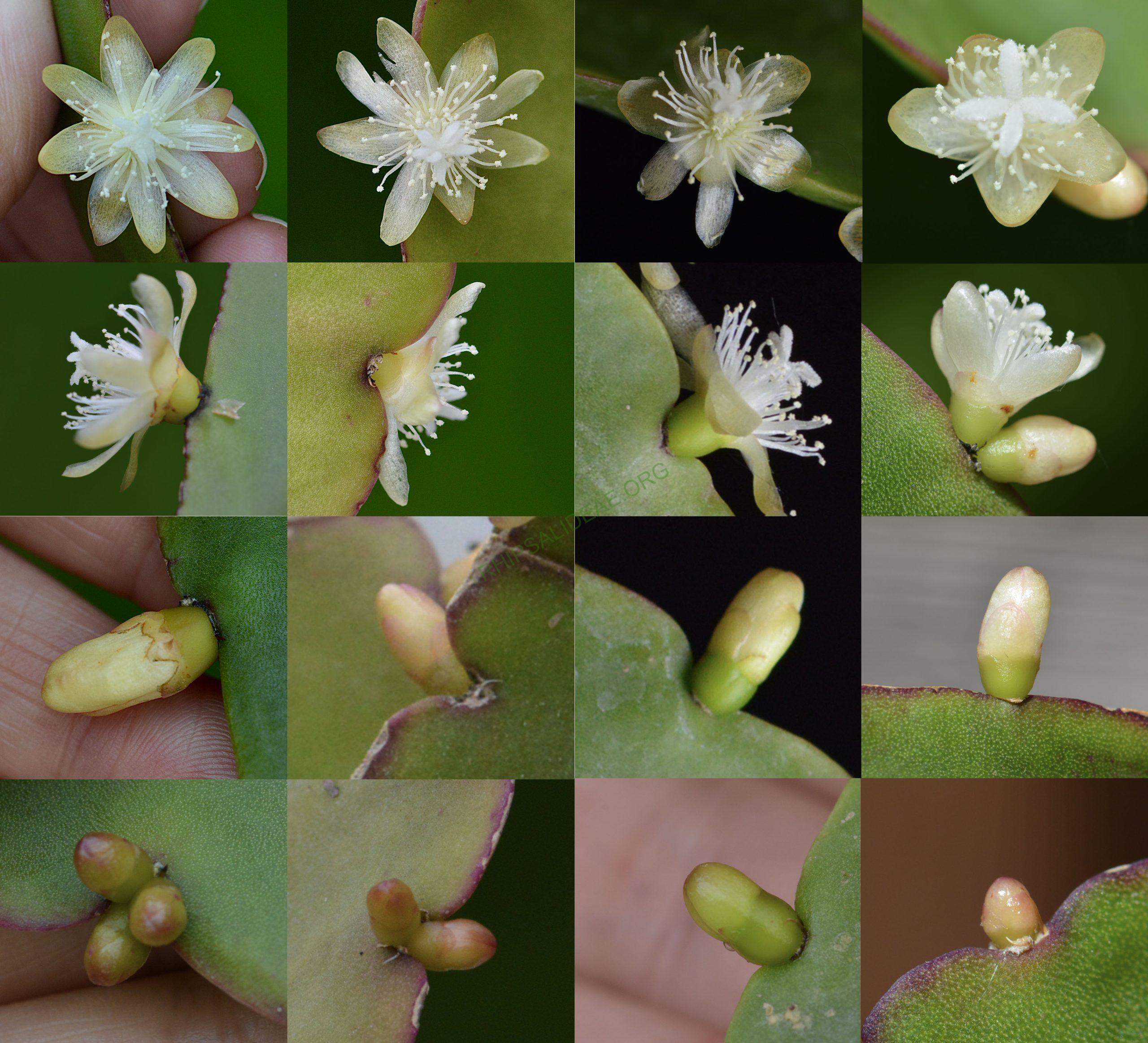
Rhipsalis pachyptera, floral variation
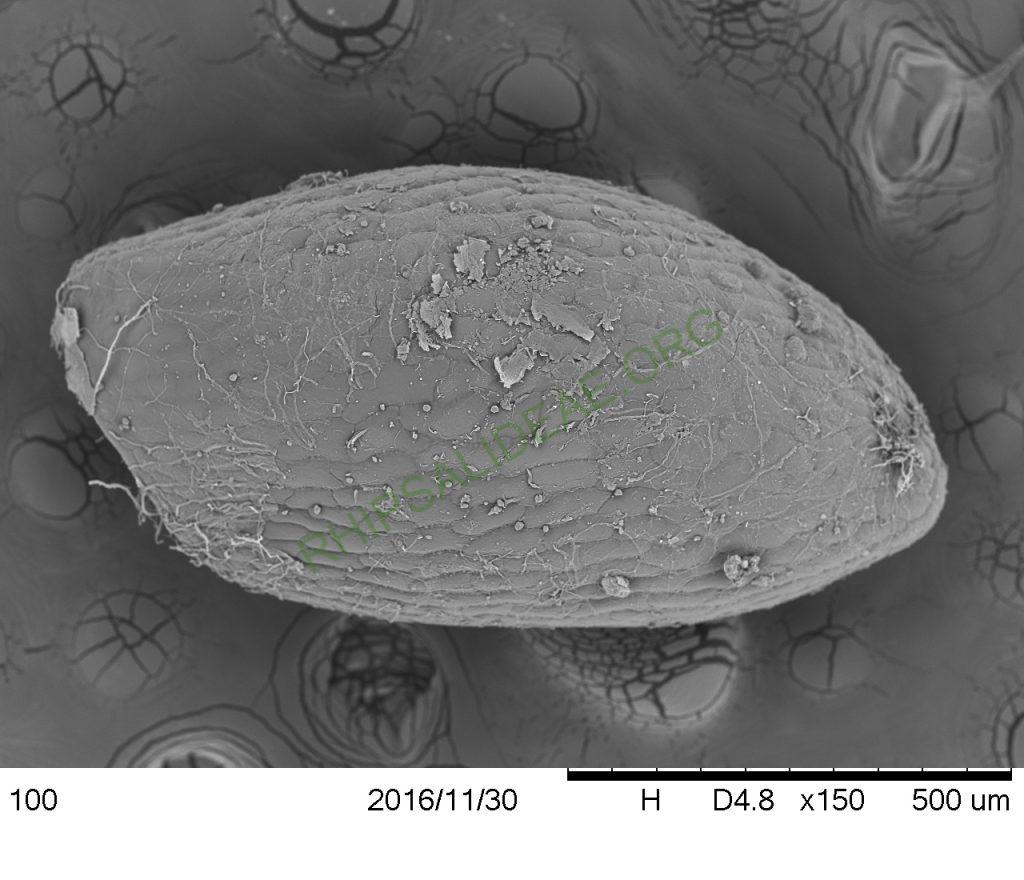
Petrópolis, Rio de Janeiro, Brazil, SEM of seed


Botanical illustrations and historical images


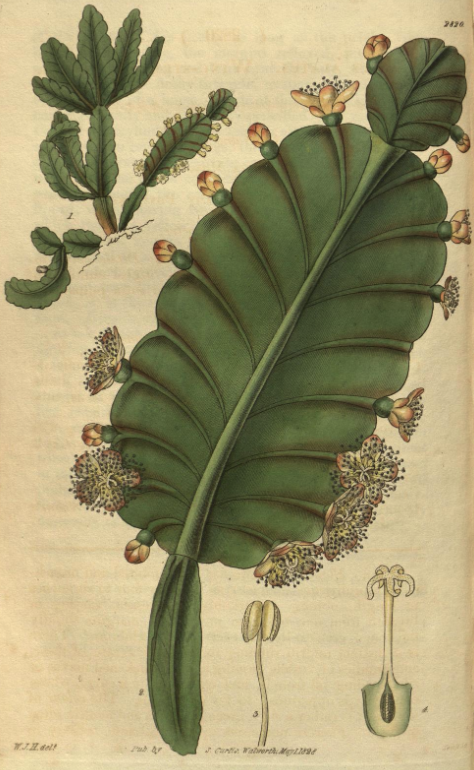
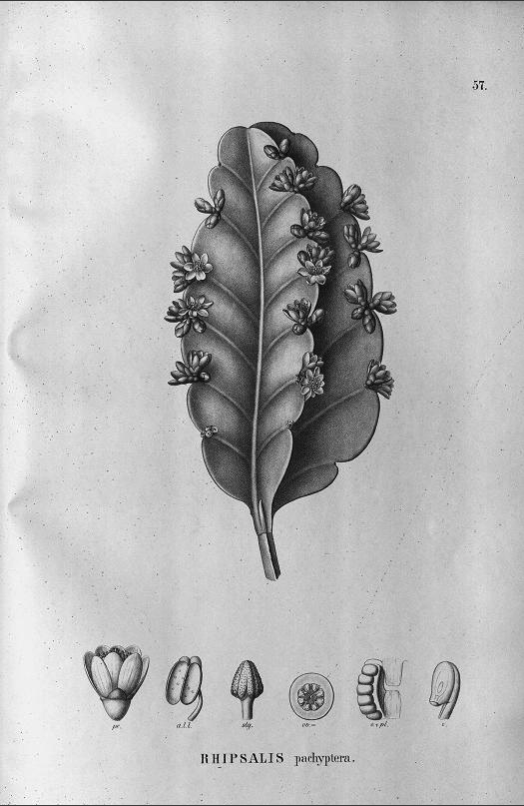


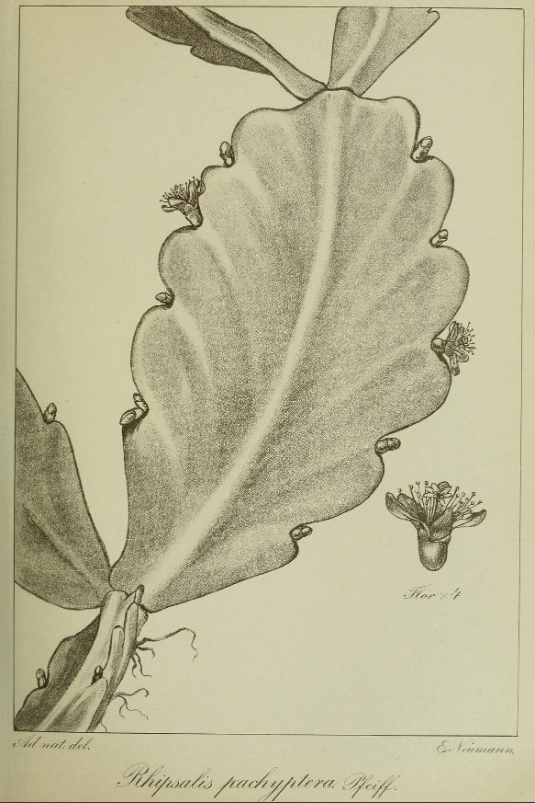
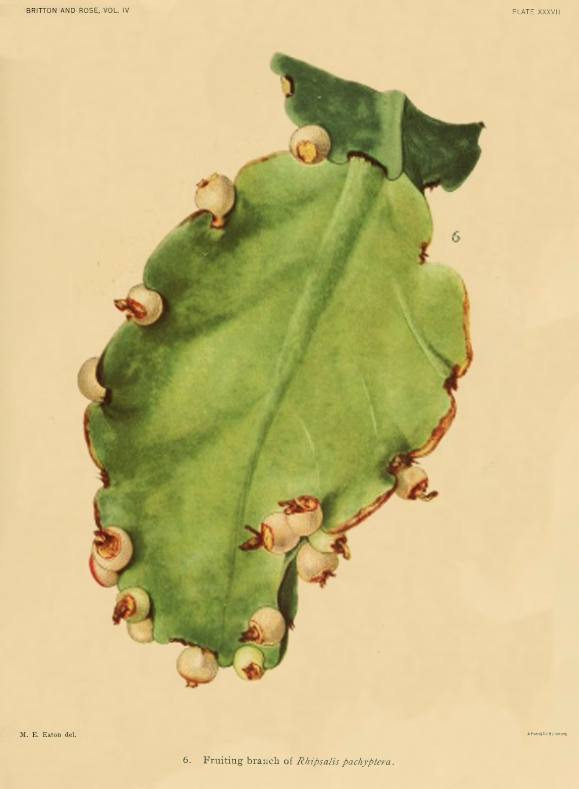

Description
| The accepted name Rhipsalis pachyptera Pfeiff. was published in Enum. Diagn. Cact.: 132. 1837. The geographic range is Brazil (Santa Catarina, São Paulo, Paraná, Rio de Janeiro) found at elevations of 0-1500 meters with an endangered status of least concern. Rhipsalis pachyptera is classified in the subgenus Phyllarthrorhipsalis. Observed growing as an epiphyte or lithophyte. Overall habit is pendant or semi-erect, branches are dimorphic (more than one stem shape) and acrotonic (stems form from the tips of previous stems). Stems are 2 to 5 angled, margins have low to deep crenations (slightly to deeply scalloped), bristles are absent. Basal stems are indeterminate (seasonal growth is various lengths), 8cm-40cm x 1cm-2.5cm. Main stems are determinate (seasonal growth is about the same length), 7cm-25cm x 3cm-15cm. Flowers are rotate: sub-patent, patent or reflexed (wheel shaped: partial to wide open to reflexed), 1.5cm x 1.3cm-2.5cm. Petals from 6 to 9, sepals from 1 to 4. Inner petals are white, light-yellow or light-green, outer petals are white, yellow, green, pink or red. Stamen are white, from 60 to 120. Stigma lobes from 4 to 8. Flower ovary is obconical, 0.3cm-0.4cm x 0.3cm-0.5cm. Flowering position on the stem is lateral and the flower orientation in relation to the stem is perpendicular. Does repeat flowering per areole. A maximum of 13 flowers were reported at a single areole. Areole position in the stems is superficial (flower ovary is visible on the surface of the stems during bud development). Trichomes or wool is absent at the areoles after flowering. Unripe fruit is yellow, green, pink or red. Ripe fruit is globose, subglobose or obconical-globose; white or pink, 0.7cm x 0.6cm-0.7cm. Other notable features: Ripe fruit often with pink or red ring around the top. R. pachyptera does more often have green stems, however, there are specimen that produce betalains that color the stems reddish in higher light conditions. Stem color is not a good identifying characteristic for any species. It is highly inconsistent within the species populations. It is mentioned here because R. pachyptera specimen with reddish colored stems are often confused with R. elliptica. R. pachyptera does commonly have very robust thick stems which are very woody and stiff at the joint in comparison to most other Rhipsalis with flat stems. The stems vary in size from the size of a thumb to well over the size of a hand. It is one of the hardest species to identify in my opinion, but it commonly exhibits a deep set areole with the flat gap between the crenations (also seen in some specimen of R. crispta, R. oblonga, R. cuneata, R. rhombea, R. russellii, and R. agudoensis), a short squat obconic flower ovary (also seen in R. agudoensis, R. cereoides, and R. triangularis), short obconical fruit that is typically white, and usually quite large predominantly white flowers (also seen in R. agudoensis and R. triangularis). The apex of the stems is often flat almost square (also seen in some specimen of R. crispta, R. russellii, R. agudoensis, and R. triangularis) unlike the typical tapering to a point toward the stem apex often seen in specimen of R. elliptica. As a result the most distinguishing characteristic is possibly the short obconic white or pink fruit. I have seen pictures of Rhipsalis in the field with very large phylloclades and long cylindrical white fruit identified by botanists as Rhipsalis elliptica. Alice Calvente treated Rhipsalis agudoensis as synonym of Rhipsalis pachyptera in her thesis.2. In her thesis Nadja Korotkova writes, "A clade of R. pachyptera, R. russellii, R. cereoides and R. agudoensis is found with maximal support. All four are morphologically similar and R. agudoensis has even been misinterpreted as an unusual form of R. pachyptera prior to its description. All four species grow semi-erect and have 3-5 ribbed, sometimes also flattened stem segments (R. pachyptera, R. russellii), often produce several flowers per single areole and have fruits that change their colour from white to pink. They are also found growing predominantly as lithophytic, not epiphytic." 1 Comments: Material Sampled, Calvente 250, RJ, Brazil (SPF), in Molecular Phylogeny, Evolution, and Biogeography of South American Epiphytic Cacti3 Material Sampled, Calvente 272, ES, Brazil (SPF), in Molecular Phylogeny, Evolution, and Biogeography of South American Epiphytic Cacti3 Material Sampled, Calvente 354, SP, Brazil (SPF), in Molecular Phylogeny, Evolution, and Biogeography of South American Epiphytic Cacti3 Material Sampled, Calvente 277, ES, Brazil (SPF), in Molecular Phylogeny, Evolution, and Biogeography of South American Epiphytic Cacti3 Material Sampled, Calvente 277, ES, Brazil (SPF), in Molecular Phylogeny, Evolution, and Biogeography of South American Epiphytic Cacti3 1Phylogeny and evolution of the epiphytic Rhipsalideae (Cactaceae), Nadja Korotkova, Ph.D. Thesis, 2012 2Molecular phylogeny, evolution and systematics of Rhipsalis (Cactaceae), Alice Calvente, Ph.D. Thesis, 2010 3Molecular Phylogeny, Evolution, and Biogeography of South American Epiphytic Cacti, Alice Calvente, Daniela C. Zappi, Félix Forest, Lúcia G. Lohmann, International Journal of Plant Sciences, 172:7, 2011 Taxonomic treatment and description were derived from:
|
Rhipsalis pachyptera referenced publications
| Title | Authors | Type | Journal | Year | Volume | Issue | Pages | Publisher |
|---|---|---|---|---|---|---|---|---|
| Epifytische cactussen, rhipsalis.eu. Accessed on: 15 Jan. 2025 | Aat van Uijen | Website | 2025 | |||||
| IPCN Chromosome Reports. Missouri Botanical Garden. Accessed on: 18 Jan. 2025 | Website | 2025 | ||||||
| Royal Botanic Gardens Kew | Plants of the World Online. Accessed on: 15 Jan. 2025 | Website | 2025 | ||||||
| The Caryophyllales Network 2015+ [continuously updated]: A global synthesis of species diversity in the angiosperm order Caryophyllales. Accessed on: 15 Jan. 2025 | Website | 2025 | ||||||
| WFO The World Flora Online. Accessed on: 15 Jan. 2025 | Website | 2025 | ||||||
| The IUCN Red List of Threatened Species. Version 2024-2. accessed on 2025-01-07 | Website | 2024 | ||||||
| Updated List of the Flora of the Serra Dos Órgãos National Park, Rio de Janeiro, RJ, Brazil | Marcus Alberto Nadruz Coelho, Cecilia Faria Cronemberger | Website | 2024 | |||||
| Cactaceae in a priority area for conservation in Espírito Santo state | Weverson Cardoso, Alice Calvente, Valquíria Dutra, Cassia Sakuragui | Journal Article | Rodriguésia | 2022 | 73 | |||
| Rio de Janeiro - Cactaceae of the State of Rio de Janeiro (version 1, 8/2022), fieldguides.fieldmuseum.org | Diego Rafael Gonzaga, Maria de Fátima Freitas, Alice Calvente | Website | 2022 | |||||
| Cactaceae at Caryophyllales.org – a dynamic online species-level taxonomic backbone for the family | Nadja Korotkova, David Aquino, Salvador Arias, Urs Eggli, Alan Franck, Carlos Gómez-Hinostrosa, Pablo C. Guerrero, Héctor M. Hernández, Andreas Kohlbecker, Matias Köhler, Katja Luther, Lucas C. Majure, Andreas Müller, Detlev Metzing, Reto Nyffeler, Daniel Sánchez, Boris Schlumpberger, Walter G. Berendsohn | Journal Article | Willdenowia | 2021 | 51 | 2 | 251 – 270 | Botanic Garden and Botanical Museum Berlin (BGBM) |
| Rio de Janeiro Botanical Garden - a visit and a surprise! | Hazel V. Taylor | Journal Article | CactusWorld | 2021 | 39 | 4 | 307-314 | |
| Cactaceae in Flora do Brasil 2020. Jardim Botânico do Rio de Janeiro. Accessed on: 15 Jan. 2025 | Daniela C. Zappi, Nigel P. Taylor | Website | 2020 | |||||
| Cactaceae na Serra da Mantiqueira, Brasil | Diego Rafael Gonzaga, Luiz Menini Neto, Ariane Luna Peixoto | Journal Article | Rodriguésia | 2020 | 71 | |||
| Flora do Rio de Janeiro: Cactaceae | Maria de Fátima Freitas, Alice Calvente, Diego Rafael Gonzaga | Journal Article | Rodriguésia | 2020 | 71 | |||
| Neotypification of Rhipsalis rhombea (Rhipsalideae, Cactaceae) and Its Taxonomic History | Ralf Bauer, Nadja Korotkova | Journal Article | Haseltonia | 2020 | 27 | 95-101 | Cactus and Succulent Society of America | |
| Relocation technique of Rhipsalis (Cactaceae) in regenerating forests, in Itaboraí - RJ: survival and development | Annete Bonnet, Gustavo Ribas Curcio, Fernando Lima Aires Gonçalves, Alexander Silva de Resende, Eder Caglioni, Osmir José Lavoranti | Journal Article | Pesquisa Florestal Brasileira | 2020 | 40 | |||
| Cactaceae no Parque Estadual da Serra da Tiririca, Rio de Janeiro, Brasil | Lucas Vasconcelos, Diego Rafael Gonzaga, Ricardo Reis | Journal Article | Rodriguésia | 2019 | 70 | |||
| Rio de Janeiro - Vascular Epiphytes of the Guapiaçu Ecological Reserve (version 1, 11/2019), fieldguides.fieldmuseum.org | Nadjara de Medeiros Corrêa, Mariana Moreira da Silva Murakami, Laura do Nascimento Martins, Ana Carolina Rodrigues da Cruz, André Felippe Nunes-Freitas | Website | 2019 | |||||
| A Journey Over the Organ Mountains in Brazil | Andreas Hofacker | Journal Article | The Cactus Explorer | 2018 | 23 | 48-62 | ||
| Rhipsalis agudoensis - a mystery solved | Nigel P. Taylor, Andreas Hofacker | Journal Article | Bradleya | 2017 | 2017 | 35 | 248 – 251 | British Cactus and Succulent Society |
| Rhipsalis, cactussen uit het tropische woud 1 | Aat van Uijen | Journal Article | Succulenta | 2017 | 96 | 6 | 270-275 | |
| Rhipsalis (Cactaceae): loss and gain of floral rewards is mirrored in range sizes and distribution patterns of species | Bernadette Grosse-Veldmann, Stefan Abrahamczyk, Jens Mutke, Wilhelm Barthlott, Maximilian Weigend | Journal Article | Botanical Journal of the Linnean Society | 2016 | 180 | 491-503 | ||
| Minas Gerais, Rio de Janeiro, São Paulo & Espírito Santo -- Cactaceae of Serra da Mantiqueira (version 1, 11/2015), fieldguides.fieldmuseum.org | Diego Rafael Gonzaga, Ariane Luna Peixoto, Luiz Menini Neto | Website | 2015 | |||||
| Cactaceae in the state of Paraná, Brasil | André Soller, Patricia Soffiatti, Alice Calvente, Renato Goldenberg | Journal Article | Rodriguésia | 2014 | 65 | 201-219 | ||
| A New Subgeneric Classification of Rhipsalis (Cactoideae, Cactaceae) | Alice Calvente | Journal Article | Systematic Botany | 2012 | 37 | 4 | 983 – 988 | The American Society of Plant Taxonomists |
| Phylogeny and evolution of the epiphytic Rhipsalideae (Cactaceae) | Nadja Korotkova | Ph.D. Thesis | 2012 | Rheinische Friedrich-Wilhelms-Universität Bonn | ||||
| Molecular phylogeny of tribe Rhipsalideae (Cactaceae) and taxonomic implications for Schlumbergera and Hatiora | Alice Calvente, Daniela C. Zappi, Félix Forest, Lúcia G. Lohmann | Journal Article | Molecular Phylogenetics and Evolution | 2011 | 58 | 3 | 456-468 | |
| Molecular Phylogeny, Evolution, and Biogeography of South American Epiphytic Cacti | Alice Calvente, Daniela C. Zappi, Félix Forest, Lúcia G. Lohmann | Journal Article | International Journal of Plant Sciences | 2011 | 172 | 7 | 902-914 | |
| What does it take to resolve relationship and to identify species with molecular markers? An example from the epiphytic Rhipsalideae (Cactaceae) | Nadja Korotkova, Borsch T, Dietmar Quandt, Nigel P. Taylor, Müller K, Wilhelm Barthlott | Journal Article | American Journal of Botany | 2011 | 98 | 1549-1572 | ||
| Molecular phylogeny, evolution and systematics of Rhipsalis (Cactaceae) | Alice Calvente | Ph.D. Thesis | 2010 | Instituto de Biociências da Universidade de São Paulo | ||||
| Rhipsalis cuneata Britton & Rose, eine variable Art mit flachen Trieben von den Ostabhängen der Anden Boliviens, Perus and Ecuadors - mit Beschreibung der neuen Unterart R. cuneata ssp. australis Ralf Bauer ssp. nov. | Ralf Bauer | Journal Article | EPIG | 2008 | 62 | 5-28 | ||
| Cactaceae | Daniela C. Zappi, Lidyanne Yuriko Saleme Aona, Nigel P. Taylor | Journal Article | Flora Fanerogâmica do Estado de São Paulo | 2007 | 5 | 180-193 | ||
| A Unique Cactus with Scented and Possibly Bat-Dispersed Fruits: Rhipsalis juengeri | Boris Schlumpberger, Robin A. Clery, Wilhelm Barthlott | Journal Article | Plant Biology | 2006 | 8 | 2 | 265-70 | |
| The New Cactus Lexicon: Atlas of illustrations | David Hunt, Nigel P. Taylor, Graham Charles | Book | 2006 | 104-120 | DH Books | |||
| The New Cactus Lexicon: Text | David Hunt, Nigel P. Taylor, Graham Charles | Book | 2006 | 138-139,142-143,253-257 | DH Books | |||
| The pendent cacti of Brazil | Pierre J. Braun, Andreas Hofacker | Journal Article | Cacti and Succulent Journal | 2006 | 78 | 6 | 286-299 | Cactus and Succulent Society of America |
| Die Namen der Gattungen und Arten epiphytischer Kakteen. Teil 1. Rhipsalideae | Ralf Bauer | Journal Article | EPIG | 1996 | 8 | 2 | 47-51 | |
| Für zentralgeheizte Wohnungen geeignet: Rhipsalis pachyptera | M. Voigt | Journal Article | EPIG | 1996 | 8 | 3 | 100-101 | |
| Notes towards a Monograph of Rhipsalideae (Cactaceae) | Wilhelm Barthlott, Nigel P. Taylor | Journal Article | Bradleya | 1995 | 13 | 43-79 | British Cactus and Succulent Society | |
| The genus Rhipsalis Gärtner (Cactaceae) in the State of São Paulo-I: species with flatened joints | Julio Antonio Lombardi | Journal Article | Acta Botanica Brasilica | 1995 | 9 | 1 | ||
| Rhipsalis paradoxa | G. Wilhelm-Maaß | Journal Article | EPIG | 1989 | 1 | 4 | 37-38 | |
| New names in Rhipsalidinae (Cactaceae) | Wilhelm Barthlott | Journal Article | Bradleya | 1987 | 5 | 97-100 | ||
| Rhipsalis en Epiphyllum - ook zij zijn het verzamelen waard! | Dieter Täuber | Journal Article | Succulenta | 1987 | 66 | 5 | 116-118 | |
| Rhipsalis occidentalis Barthlott et Rauh. Eine neue Art mit blattartig abgeflachten Sprossen aus Ecuador und Peru | Wilhelm Barthlott, Werner Rauh | Journal Article | Kakteen und andere Sukkulenten | 1987 | 38 | 1 | 16-19 | |
| Chromosome numbers in the tribe Rhipsalinae (Cactaceae) | T. W. J. Gadella, E. Kliphuis, J. Naber | Journal Article | Botaniska notiser | 1979 | 3 | 294 | ||
| Iii. Unterfamilie Cereoideae K. Schum. 1898 | Friedrich Ritter | Journal Article | Kakteen in Südamerika | 1979 | 20 | 1 | 36-47 | |
| Cactus Lexicon | Curt Backeberg, Walther Haage | Book | 1966 | 205,220-222,440-449, 647, 750 | Blandford Press Ltd. (1966-1973) | |||
| Über Rhipsalis - II. Teil: Die Heimat (Schluß) | Erich Schäfer | Journal Article | Kakteen und andere Sukkulenten | 1962 | 13 | 7 | 114-117 | |
| Archivos do Jardim Botânico do Rio de Janeiro | Jardim Botânico do Rio de Janeiro | Book | 1948 | 8 | 146 | Rio de Janeiro, Jardim Botanico | ||
| Iets Over Onze Rhipsalideae. | G. D. Duursma | Journal Article | Succulenta | 1943 | 25 | 1 | 7 | |
| Notiser från Lunds Botaniska Trädgård. | Hakon Hjelmqvist | Journal Article | Botaniska notiser | 1941 | 4 | 343-361 | ||
| Het Leekenhoekje. | J. M. van den Houten | Journal Article | Succulenta | 1936 | 18 | 1 | 8-10 | |
| Rodriguésia: Revista do Jardim Botânico do Rio de Janeiro | Jardim Botânico do Rio de Janeiro | Book | 1935 | 42-44 | 79-83 | Instituto de Pesquisas Jardim Botânico do Rio de Janeiro | ||
| The Cactaceae : descriptions and illustrations of plants of the cactus family | Nathaniel Lord Britton, Mary E. Eaton, N. J. Rose, Helen Adelaide Wood | Book | 1923 | 4 | 208-247 | Carnegie Institution of Washington | ||
| Cactus culture for amateurs: a concise and practical guide to the management of a little understood family of plants | William Watson | Book | 1920 | London, "The Bazaar, exchange & mart" office, 1920 | ||||
| Beihefte zum botanischen Centralblatt. Erste Abteilung, Anatomie, Histologie, Morphologie und Physiologie der Pflanzen | Book | 1920 | 37 | 221 | Verlag von G. Thiem | |||
| The standard cyclopedia of horticulture; a discussion, for the amateur, and the professional and commercial grower, of the kinds, characteristics and methods of cultivation of the species of plants grown in the regions of the United States and Canada for ornament, for fancy, for fruit and for vegetables; with keys to the natural families and genera, descriptions of the horticultural capabilities of the states and provinces and dependent islands, and sketches of eminent horticulturists | Liberty Hyde Bailey | Book | 1919 | 5 | 2929-2930 | New York, Macmillan, 1919 [c1914] | ||
| Archivos do Jardim Botânico do Rio de Janeiro | Jardim Botânico do Rio de Janeiro | Book | 1915 | 1 | 61-105 | Rio de Janeiro, Jardim Botanico | ||
| Hortus Mortolensis : enumeratio plantarum in Horto Mortolensi cultarum = Alphabetical catalogue of plants growing in the garden of the late Sir Thomas Hanbury ... at La Mortola, Ventimiglia, Italy | Giardino Botanico Hanbury, Alwin Berger | Book | 1912 | 272-273 | London, West, Newman, 1912 | |||
| Handbuch der Kakteenkultur : kurze Beschreibung der meisten gegenwärtig im Handel befindlichen Kakteen, nebst Angabe zu deren Pflege für Gärtner und Kakteenliebhaber zusammengestellt | Ernst Schelle | Book | 1907 | 226-233 | Stuttgart, E. Ulmer, 1907 | |||
| Blühende Kakteen (Iconographia Cactacearum): Im auftrage der Deutschen Kakteen-Gesellschaft | Karl Schumann, Toni Gürke | Book | 1907 | 23 | 90 | |||
| Blühende Kakteen (Iconographia Cactacearum): Im auftrage der Deutschen Kakteen-Gesellschaft | Karl Schumann, Toni Gürke | Book | 1903 | 9 | 34 | |||
| Monatsschrift für Kakteenkunde | Book | 1900 | 10 | 32,37,116,125,193 | Neudamm, J. Neumann | |||
| Icones Selectae Horti Thenensis | M. Èm. de Wildeman | Book | 1900 | 2 | 110-114 | |||
| Gesamtbeschreibung der Kakteen (Monographia cactacearum) | Karl Schumann, Karl Hirscht | Book | 1899 | 618-650 | Neudamm [Dębno, Poland?], J. Neumann, 1899 | |||
| Monatsschrift für Kakteenkunde | Book | 1896 | 6 | 30-32, 190 | Neudamm, J. Neumann | |||
| Dictionnaire d'horticulture illustré | D. Bois | Book | 1893 | 1045-1048 | P. Klincksieck | |||
| Monatsschrift für Kakteenkunde | Karl Schumann | Book | 1893 | 3 | 8-12,22-27,33-35,69,91 | Neudamm, J. Neumann | ||
| Die Sukkulenten (Fettplanzen und Kakteen) : Beschreibung, Abbildung und Kultur derselben | Theodor Rümpler, Karl Schumann | Book | 1892 | 209-213 | Berlin, P. Parey, 1892 | |||
| Revisio generum plantarum vascularium omnium atque cellularium multarum secundum leges nomenclaturae internationales cum enumeratione plantarum exoticarum in itinere mundi collectarum, mit erläuterungen | Otto Kuntze | Book | 1891 | 1 | 261 | A. Felix | ||
| Carl Friedrich Forster's Handbuch der Cacteenkunde in ihrem ganzen Umfange :nach dem gegenwartigen Stande der Wissenschaft bearbeitet und durch die seit 1846 begrundetet Gattungen und neu eingefuhrten Arten vermehrt | Carl Friedrich Förster, Theodor Rümpler | Book | 1886 | 2 | 878-893 | Leipzig, Wöller, 1886 | ||
| Cactaceous Plants Their History & Culture | Lewis Castle | Book | 1884 | 72-74 | Printed at the Horticultural Press | |||
| Cactaceous plants: their history and culture | R. Lewis Castle | Book | 1884 | 71-75 | Horticultural Press | |||
| Cactaceous Plants | R. Lewis Castle | Journal Article | The journal of horticulture and cottage gardener | 1884 | 9 | 333-334 | ||
| Garten-Zeitung | Ludwig Wittmack, W. Perring | Book | 1882 | 2 | 47 | P. Parey | ||
| Flora Brasiliensis, enumeratio plantarum in Brasilia hactenus detectarum :quas suis aliorumque botanicorum studiis descriptas et methodo naturali digestas partim icone illustratas | Karl Friedrich Philipp von Martius, August Wilhelm Eichler, Ignaz Urban, Stephan Endlicher, Eduard Fenzl, Benj. Mary, R. Oldenburg | Book | 1869 | 4 | 2 | 266-300 | Monachii et Lipsiae [Munich & Leipzig], R. Oldenbourg, 1840-1906 | |
| Les Cactées: Histoire, Patrie, Organes de Végétation Inflorescence, Culture, Etc | Charles Antoine Lemaire | Book | 1868 | 78-81 | Librairie agricole de la maison rustique | |||
| L'Illustration horticole : journal spécial des serres et des jardins, ou choix raisonné des plantes les plus intérressantes sous le rapport ornemental, comprenant leur histoire complete, leur description comparée, leur figure et leur culture | Charles Antoine Lemaire | Book | 1859 | 6 | 89 | Gand, Belgium Imprimerie et lithographie de F. et E. Gyselnyck 1854-1896 | ||
| Cacteae in horto Dyckensi cultae anno 1849, secundum tribus et genera digestae : additis adnotationibus botanicis characteribusque specierum in enumeratione diagnostica cactearum Doct. Pfeifferi non descriptarum | Joseph Salm-Reifferscheidt | Book | 1850 | 58-62 | Bonnae, Apud Henry & Cohen, typis C. Georgii, 1850 | |||
| Flore des jardins et des grandes cultures, ou Description des plantes de jardins, d'orangeries et des grandes cultures, leur multiplication, l'epoque de leur fleuraison et de leur fructification, et leur emploi, avec planches gravées, dont une coloriée | Nicolas Charles Seringe | Book | 1849 | 350-359 | Lyon, C. Savy, jeune, 1849 | |||
| Reisen in Britisch-Guiana in den Jahren 1840-1844 : nebst einer Fauna und Flora Guiana’s nach Vorlagen von Johannes Müller, Ehrenberg, Erichson, Klotzsch, Troschel, Cabanis und Andern | Richard Schomburgk, Robert H. Schomburgk, Jean Louis Cabanis, Christian Gottfried Ehrenberg, W. F. Erichson, Fr. Klotzsch, Johannes Müller, F. H. Troschel | Book | 1847 | 3 | 989 | J. J. Weber | ||
| Handbuch der Cacteenkunde in ihrem ganzen Umfange. Oder die erfolgreichsten, auf die neuesten Erfahrungen gegrundeten Kultruangaben, sowie ausführliche und genaue Beschreibung und berichtigte Synonymik sämmtlicher bis jetzt bekannt gewordener Cacteen, und überhaupt alles in Bezug auf diese Pflanzenfamilie sonst nur Wissenswerthe. Auf den Grund langjähriger eigener und fremder Erfahrungen | Carl Friedrich Förster | Book | 1846 | 447-462 | Leipzig, J.T. Wöller, 1846 | |||
| Cacteæ in horto dyckensi cultæ anno 1844 | Joseph Salm-Reifferscheidt | Book | 1845 | 38-40 | E. Typis Crapelet | |||
| Repertorium botanices systematicae | Wilhelm Gerhard Walpers | Book | 1842 | 2 | 342-345 | Sumtibus Friderici Hofmeister | ||
| Nomenclator botanicus hortensis... | Gustav Heynhold | Book | 1840 | 2 | 98-99 | Arnoldischen Buchhandlung | ||
| Herbier général de l'amateur, deuxième série, contenant les figures coloriées des plantes nouvelles, rares et intéressantes des jardins de l'Europe, avec leurs description, histoire, propriétés et culture. Par M. le Dr. Loiseleur-Deslongchamps, Chevalier de l'ordre royal de la Légion-d'Honneur, Membre de la Société royale et centrale d'agriculture, de celle d'horticulture de Paris, et de plusieurs autres Sociétés savantes. Auteur de la 1re. série. ; Tome premier | Loiseleur-Deslongchamps | Book | 1839 | 4-5 | Paris : Audot, éditeur du Bon Jardinier, rue du Paon, 8, École de médecine (Paris. -- Imprimerie de Fain et Thunot, ...) | |||
| Synopsis plantarum; seu, Enumeratio systematica plantarum plerumque adhuc cognitarum cum differentiis specificis et synonymis selectis ad modum Persoonii elaborata | David Nathanael Friedrich Dietrich | Book | 1839 | 117-118 | B. F. Voigtii | |||
| Enumeratio diagnostica cactearum hucusque cognitarum | Louis Pfeiffer | Book | 1837 | 129-142 | Sumtibus L. Oehmigke | |||
| Histoire naturelle des végétaux. Phanérogames, Phanérogames | Edouard Spach | Book | 1834 | 13 | 388-395 | Librairie encyclopédique de Roret | ||
| Nouvelle Espèce de Rhipsalis (Hariota), Par MM. F. Otto et Alb. Dietrich. (Atig. Gartenz., mars 1841.) | Charles Lemaire | Journal Article | Herbier General de l’Amateur | 1834 | 3 | 2 | 4-5 | |
| Annales de flore et de pomone :ou journal des jardins et des champs | Libraire-Éditeur Rousselon | Book | 1832 | 9 | 257-268, 271-272 | Paris, Rousselon, Libraire-Éditeur, 1832-[1848] | ||
| Icones Plantarum Rariorum Horti Regii Botanici Berolinensis | Heinrich Friedrich Link, Friedrich Otto | Book | 1828 | 38-39 | ||||
| Petro nomine ac imperio primo Brasiliensis imperii perpetuo defensore ... jubente Florae fluminensis icones, nunc primo eduntur ... | José Mariano da Conceição Velloso, Francisco Antonio de Arrábida, Alois Senefelder | Book | 1827 | 5 | 21, 25, 29, 30, 31 | Ex off. lithogr. Senefelder, curante J. Knecht | ||
| Paxton's flower garden | John Lindley, Joseph Paxton, L. Constans, Bradbury & Evans. | Book | 1850 | 1 | 155 | |||
| Die Gartenwelt | Max Hesdörffer | Book | 1897 | 13 | 117 | G. Schmidt | ||
| Möllers Deutsche Gärtner-Zeitung | Ludwig Möller | Book | 1910 | 25 | 477 | |||
| Vegetationsbilder | George Karsten, Heinrich Schenck | Book | 1903 | 1 | 5 | G. Fischer | ||
| Die Gartenwelt | J. Görbing | Book | 1912 | 16 | 633-635 | G. Schmidt | ||
| Bulletin des Sciences Physiques et Naturelles en Néerlande | F. A. W. Miquel, G. J. Mulder, W. Wenckeback | Book | 1838 | 48-49 | ||||
| Supplementum plantarum succulentarum: sistens plantas novas vel nuper introductas, sive omissas, in Synopse plantarum succulentarum : cum observationibus variis anglicanis | Adrian Hardy Haworth | Book | 1819 | 84 | Impensis J. Harding | |||
| Les Rhipsalis | A. Dupuis | Journal Article | Revue horticole | 1861 | 110-111 | Librairie agricole de la maison rustique | ||
| A remarkable new species of Rhipsalis Gaertner (Cactaceae) and notes on other Brazilian species | Nigel P. Taylor, Igor Souza Ribeiro, Lidyanne Y. S. Aona, Daniela C. Zappi | Journal Article | Bradleya | 2026 | 44 | 41-47 |
Reduced Synonyms
| Name | Reduced by | Published Date | Published In |
|---|---|---|---|
| Hariota pachyptera (Pfeiff.) Kuntze | Barthlott & Taylor (1995) | 1891 | Revis. Gen. Pl. 1: 263. 1891 |
| Cactus alatus Willd. | Barthlott & Taylor (1995) | 1814 | Enum. Pl., Suppl.: 35. 1814 |
| Cactus alatus Hook. | Korotkova (2021) | 1828 | Bot. Mag. 55: t. 2820. 1828 |
| Cactus triqueter Vell. | Barthlott & Taylor (1995) | 1829 | Fl. Flumin.: 206. 1829 |
| Hariota triquetra (Vell.) Kuntze | Barthlott & Taylor (1995) | 1891 | Revis. Gen. Pl. 1: 263. 1891 |
| Cereus alatus Link & Otto | Barthlott & Taylor (1995) | 1830 | Icon. Pl. Rar.: 77. 1830 |
| Lepismium fluminense Miq. | Britton & Rose (1923) | 1838 | Bull. Sci. Phys. Nat. Néerl. 1938: 48. 1838 |
| Rhipsalis robusta Lem. | Barthlott & Taylor (1995) | 1860 | Rev. Hort. (Paris). Ser. IV, ix.: 502. 1860 |
| Hariota robusta (Lem.) Kuntze | Barthlott & Taylor (1995) | 1891 | Revis. Gen. Pl. 1: 263. 1891 |
| Rhipsalis dusenii Hjelmq. | Barthlott & Taylor (1995) | 1941 | Bot. Not. 1941: 349. 1941 |
| Rhipsalis pachyptera f. rubra Süpplie | Kew WCVP (2019) | 2005 | Epi-Flora 1: 16. 2005 |