
Lepismium lumbricoides f. lumbricoides (Lem.) Barthlott
Images | Description | Publications | Reduced Synonyms
Brazil


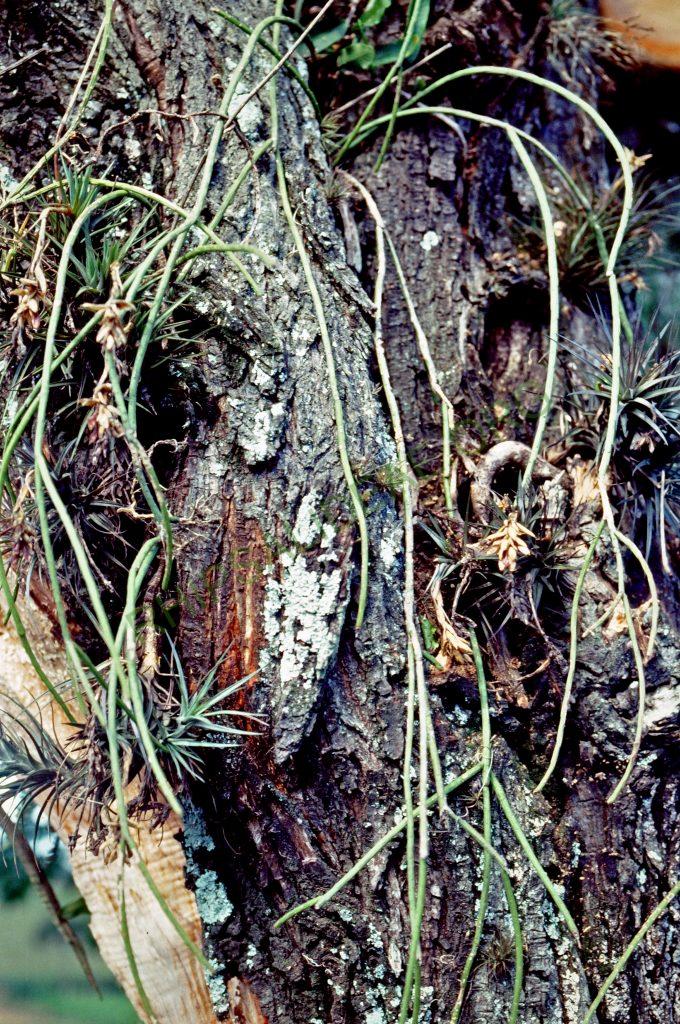
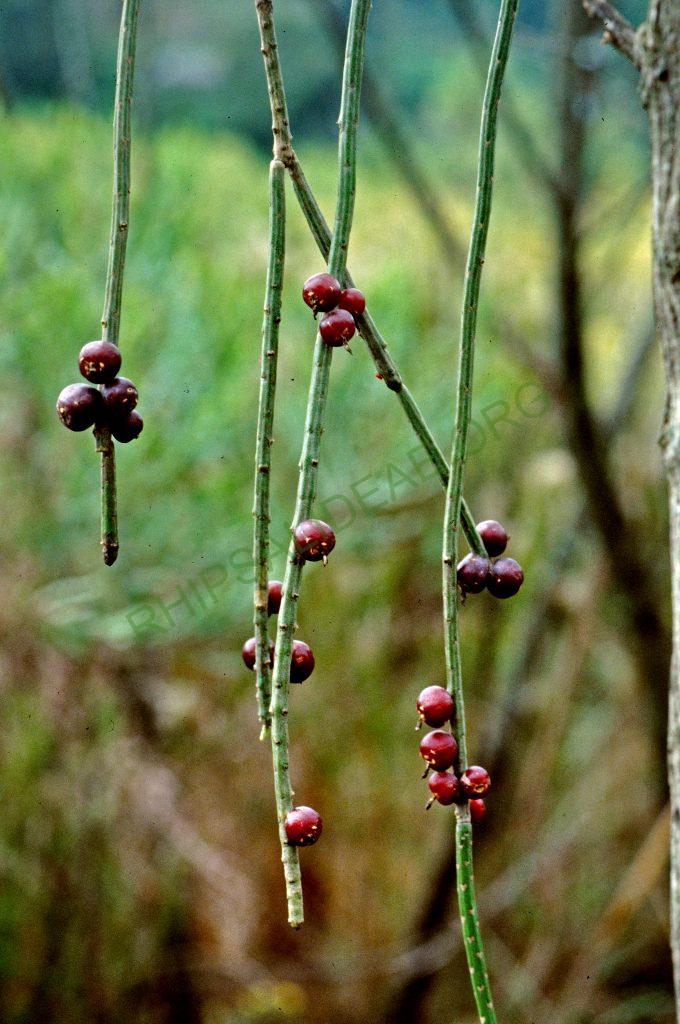
No. 04543
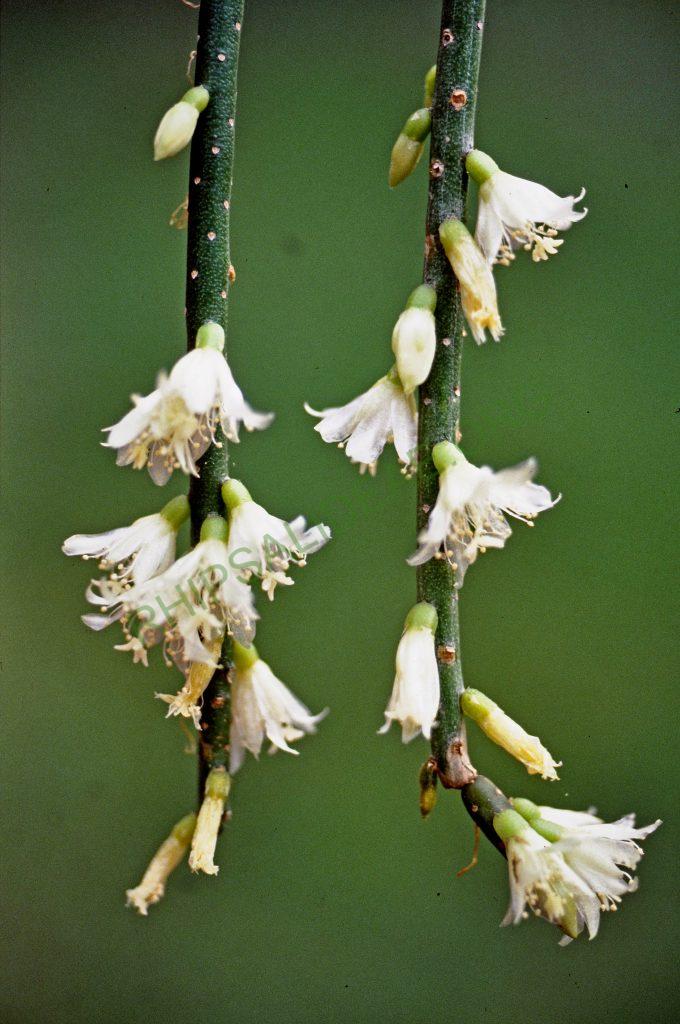

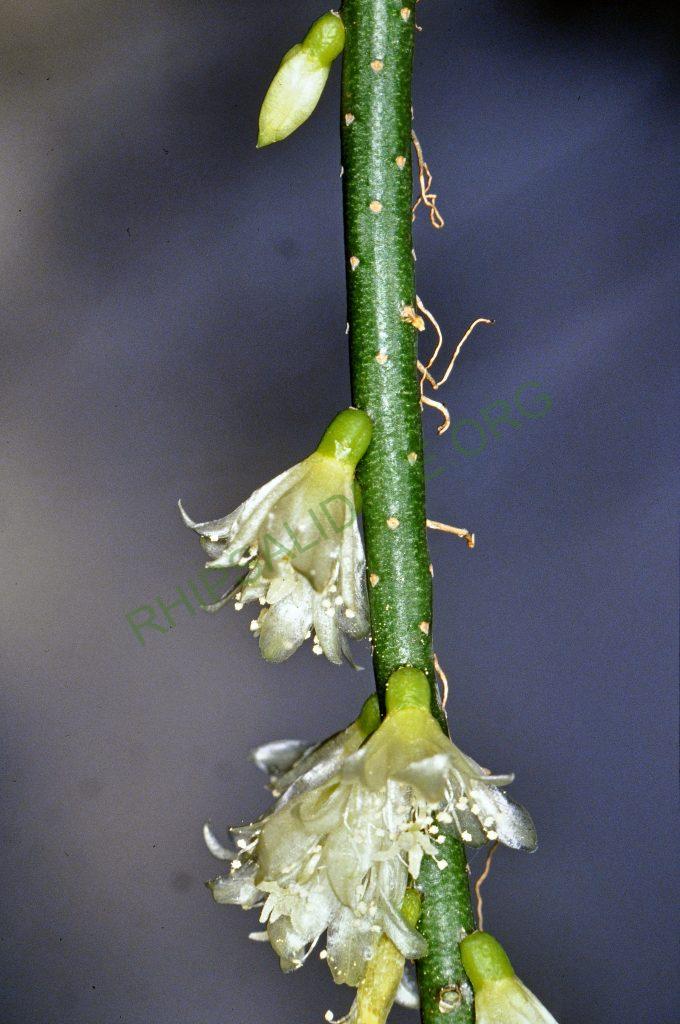
W. Barthlott, Lotus-Salvinia.de

Bonn 4278, Paraguay
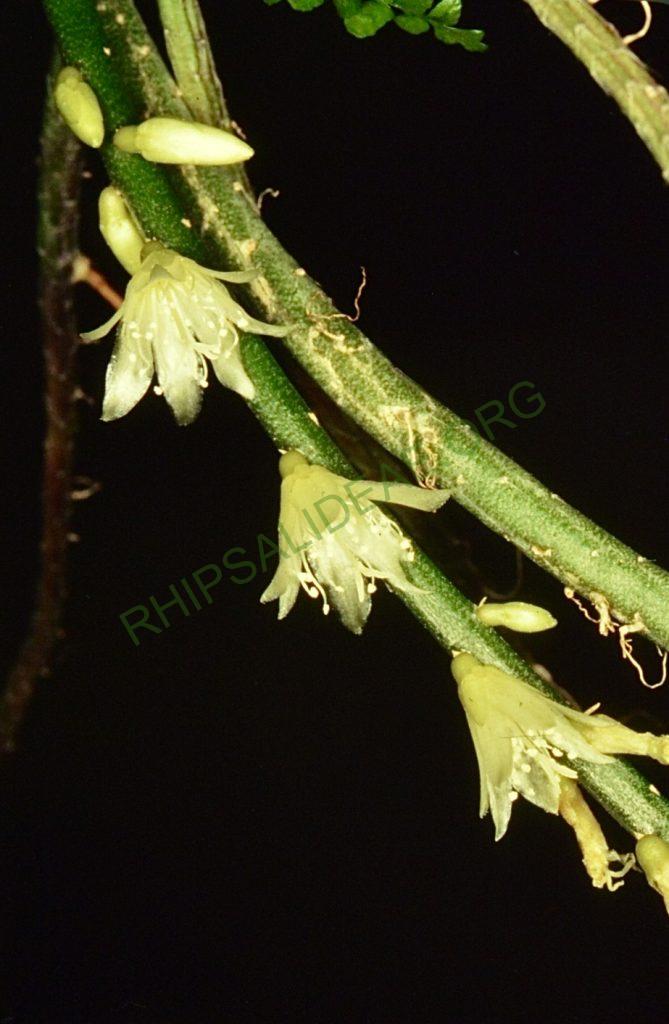
AH 139 Santana de Livramento (West), Rio Grande do Sul, Brazil

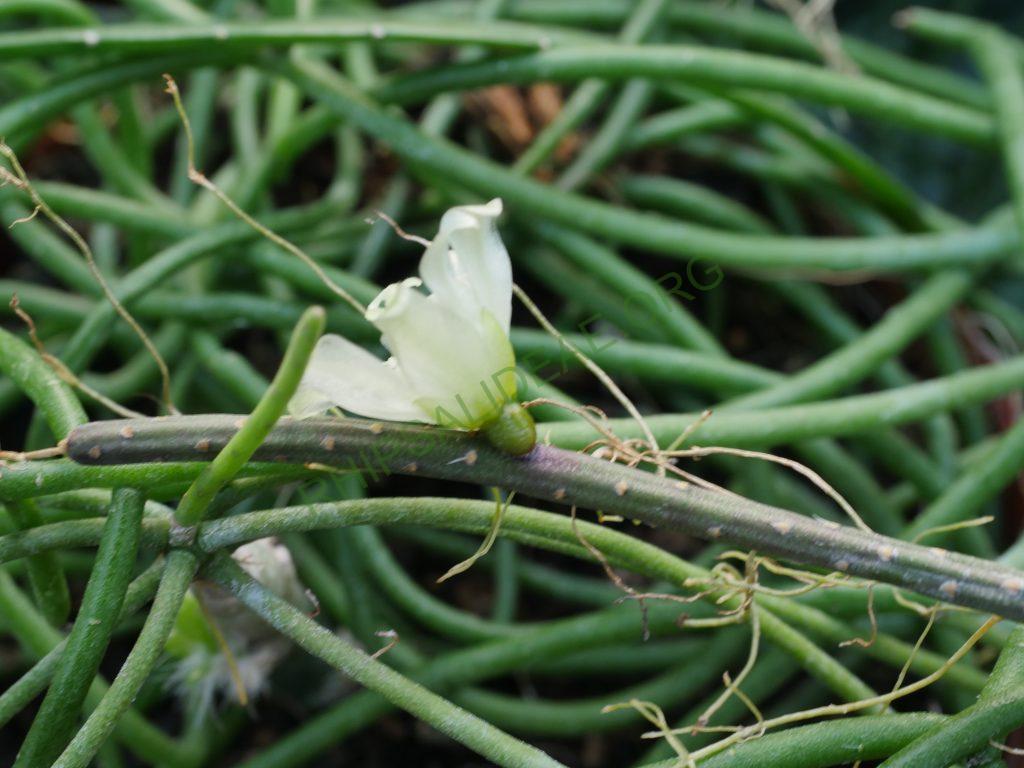
BA 023/02, Ciudad del Este, Alto Paraná, Paraguay, 200m
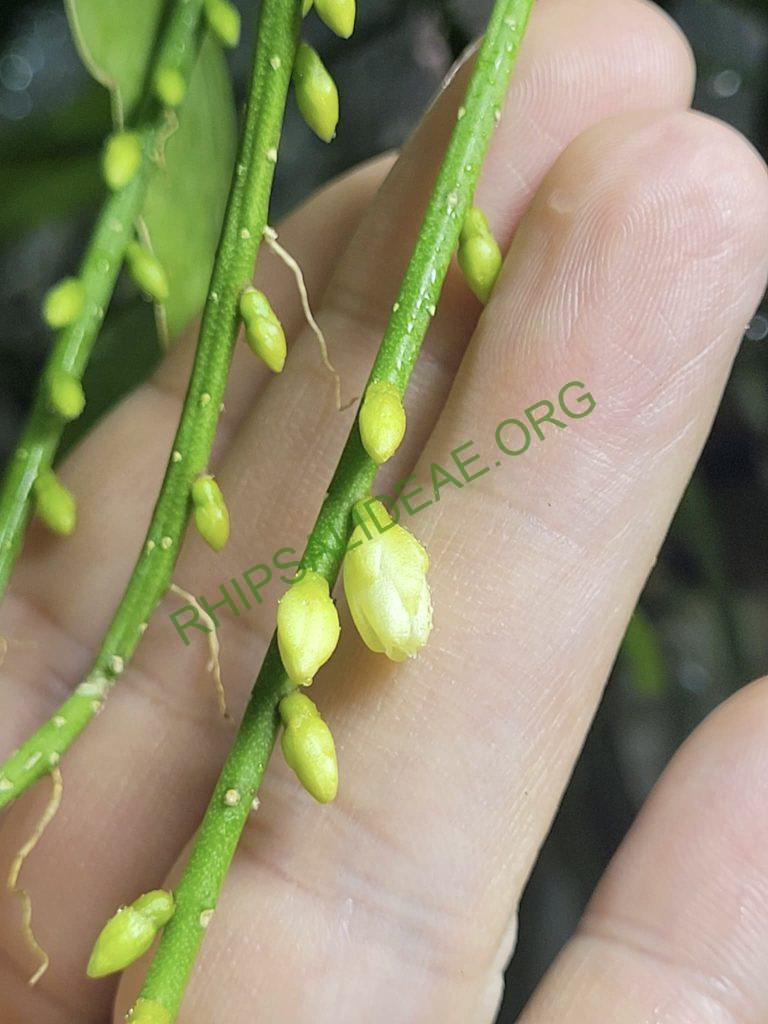
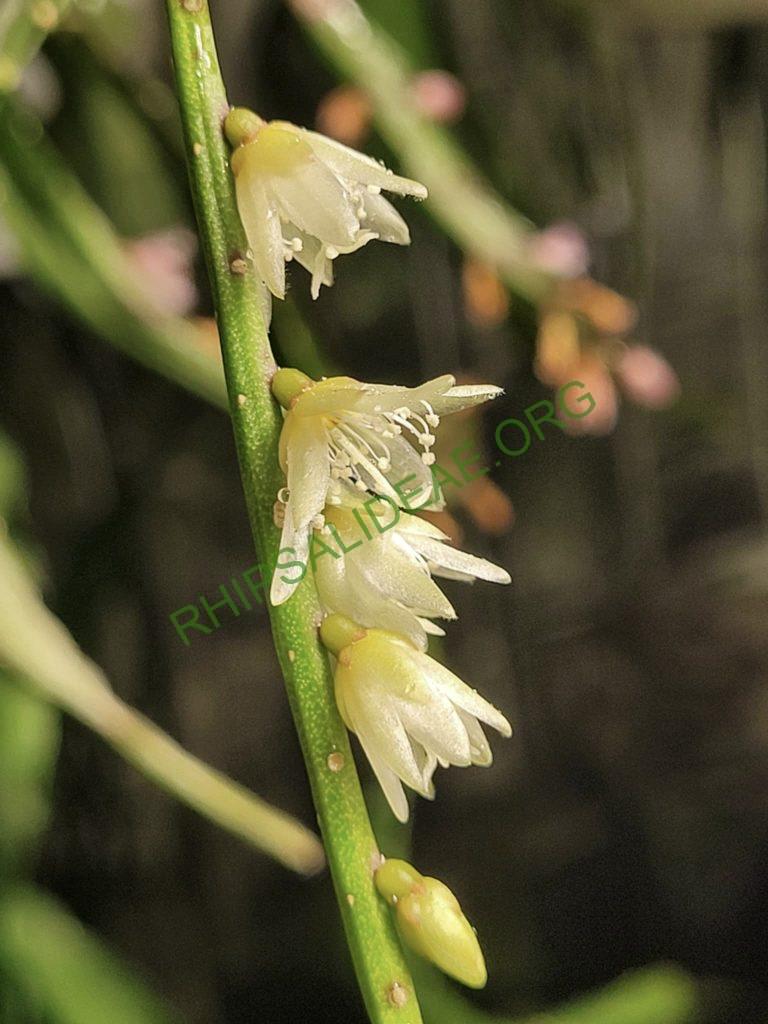
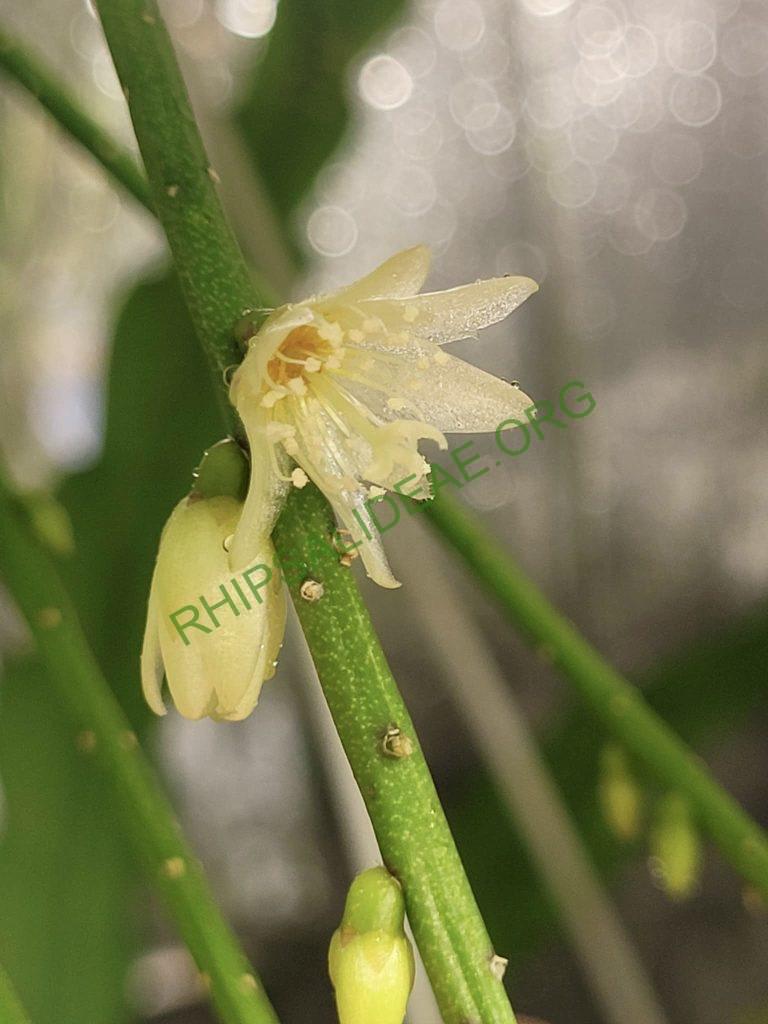
Mataral, Bolivia
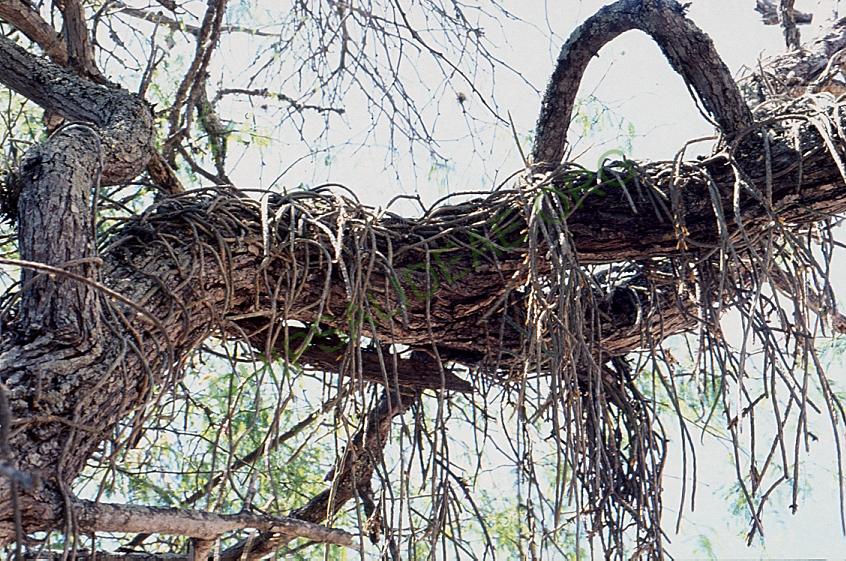
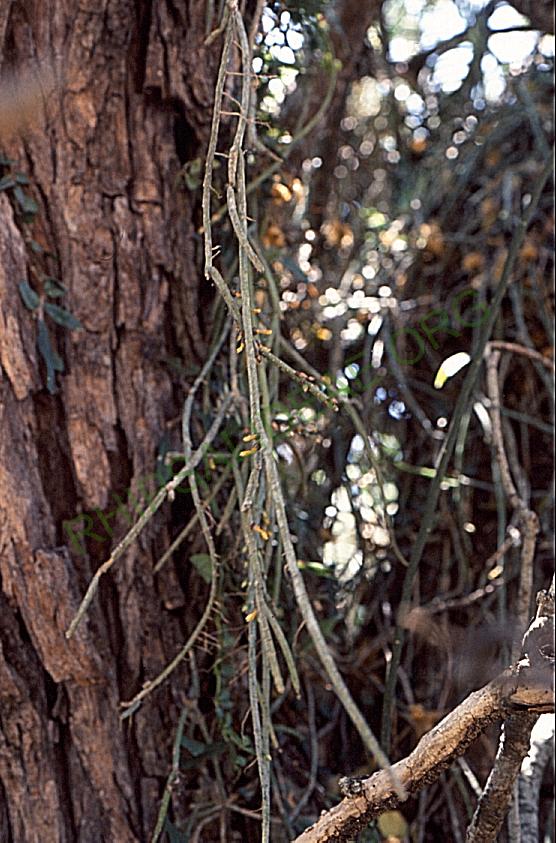
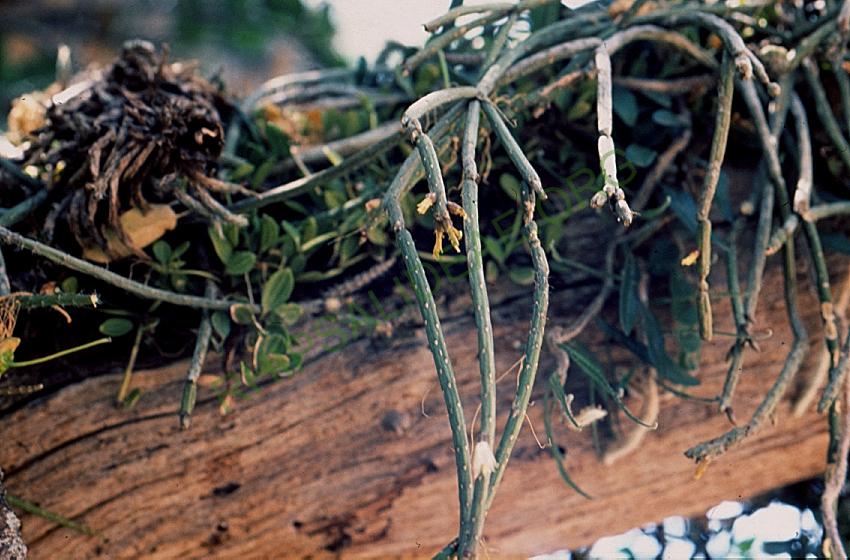
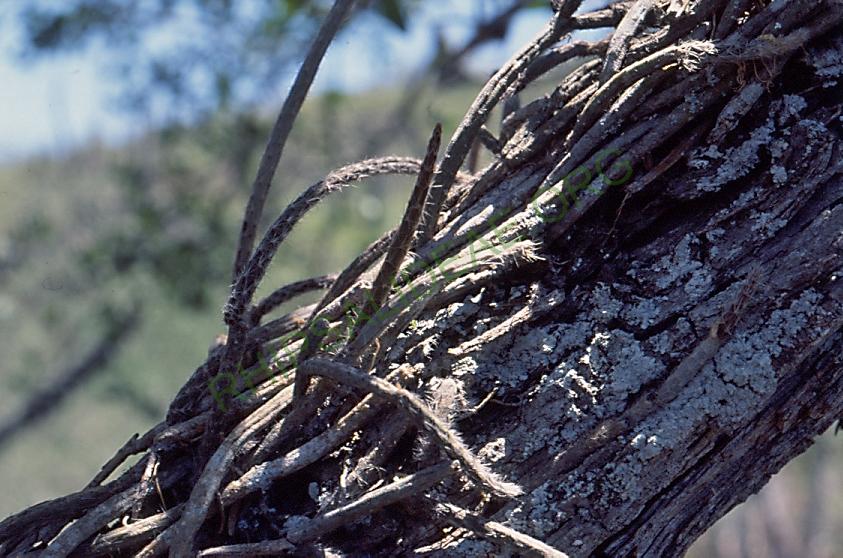
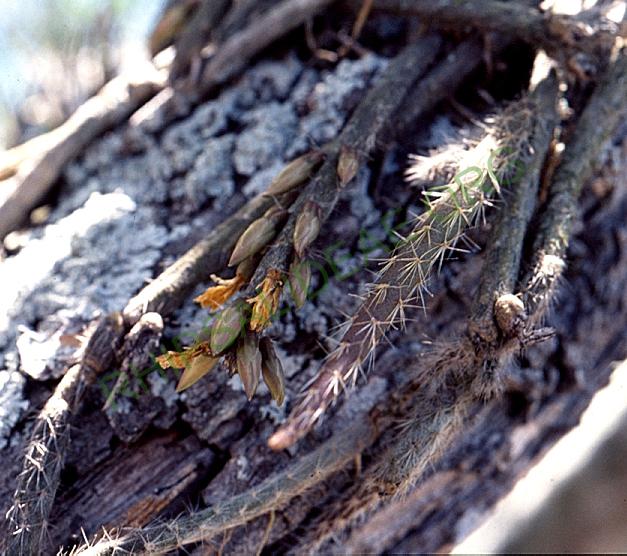
ISI 1369, Herradura, Formosa, Argentina, Utrecht University Botanic Gardens

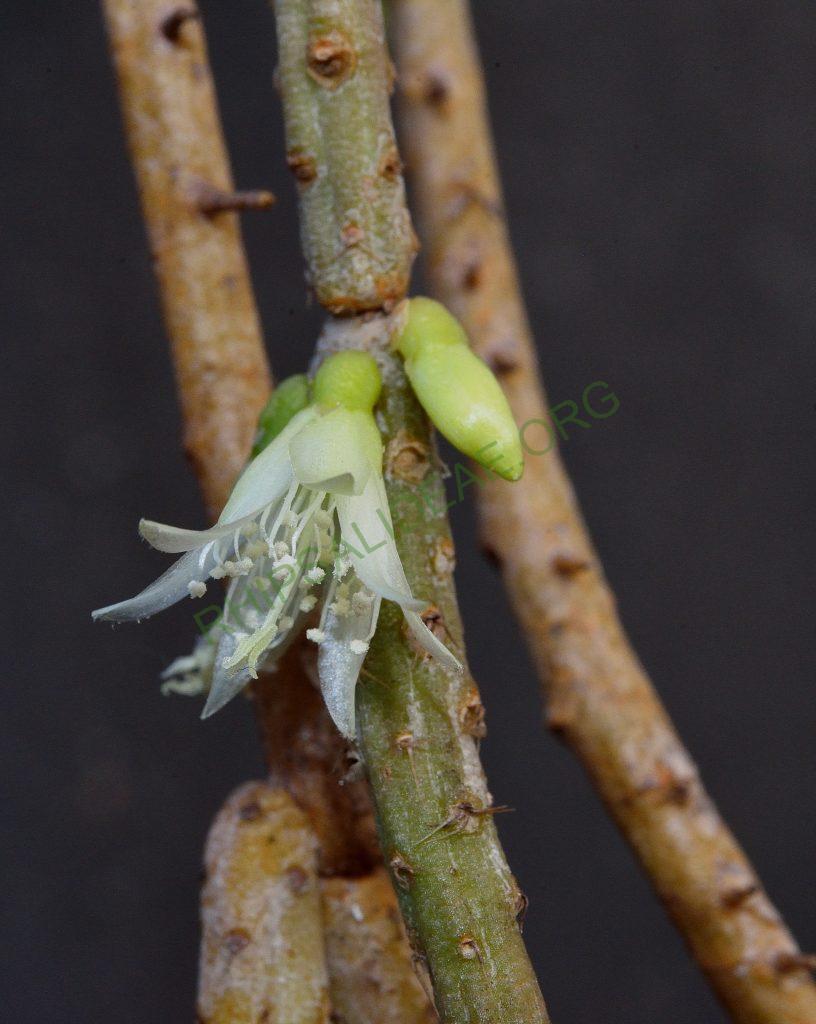
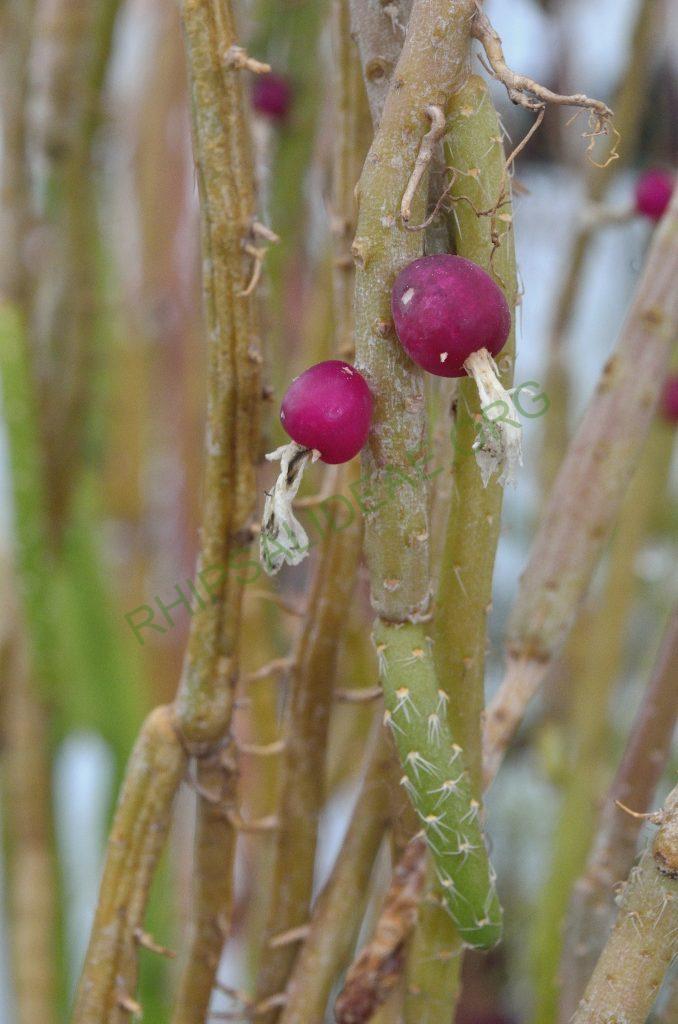
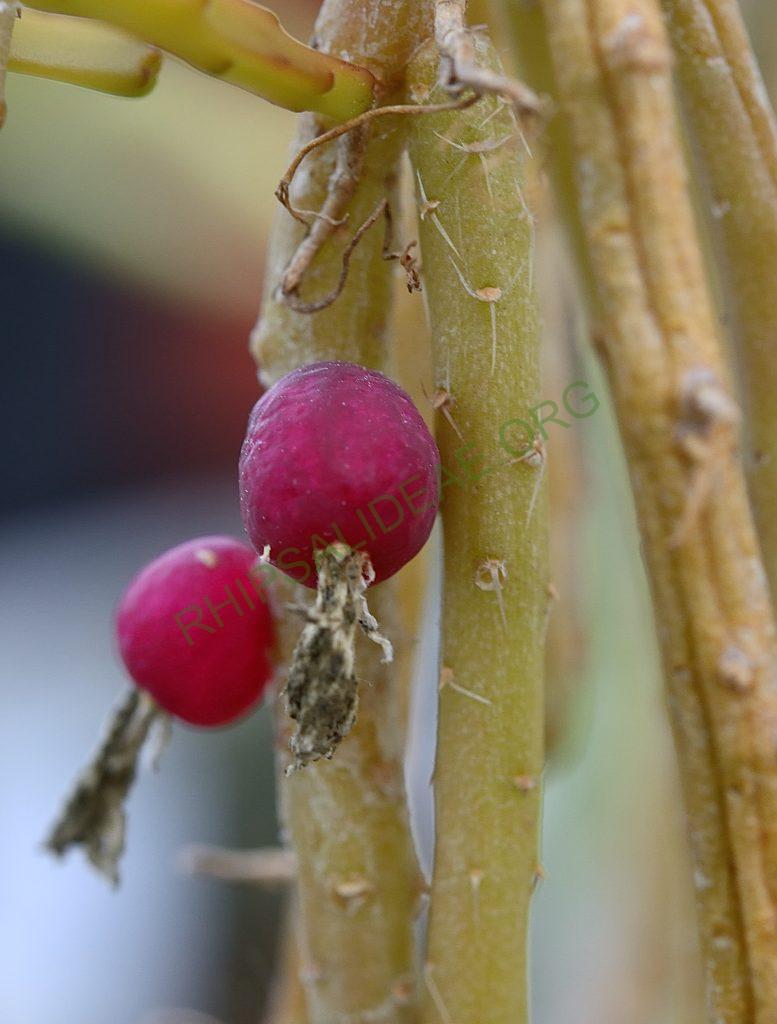
LB 566, near Corvo, Rio Grande do Sul, Brazil, Utrecht University Botanic Gardens
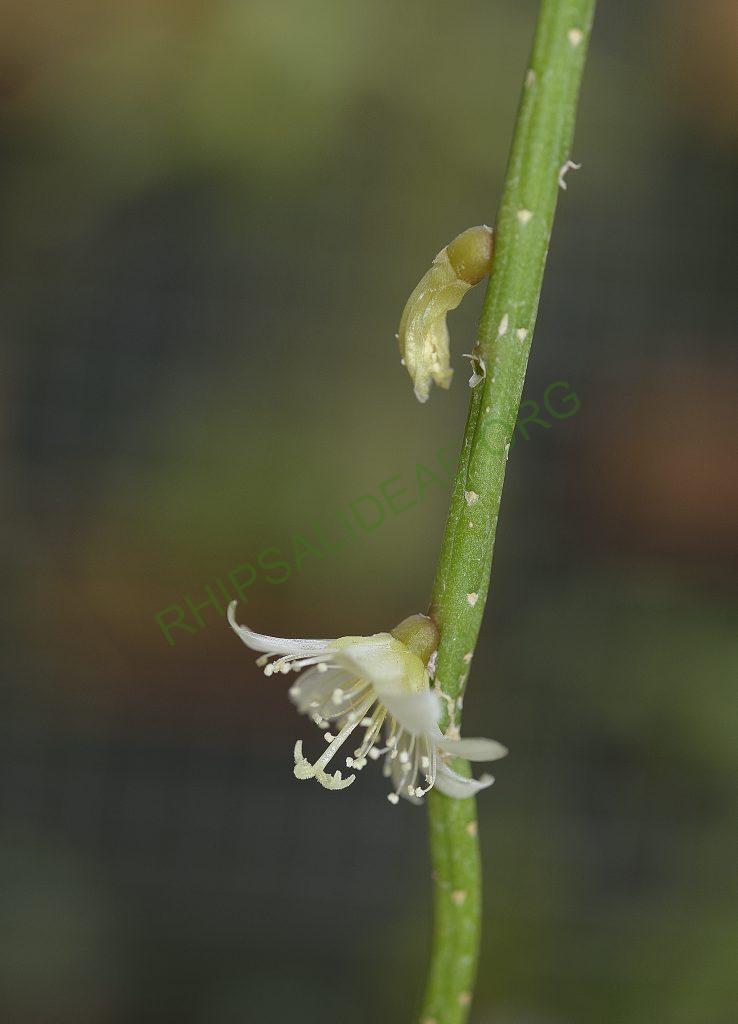
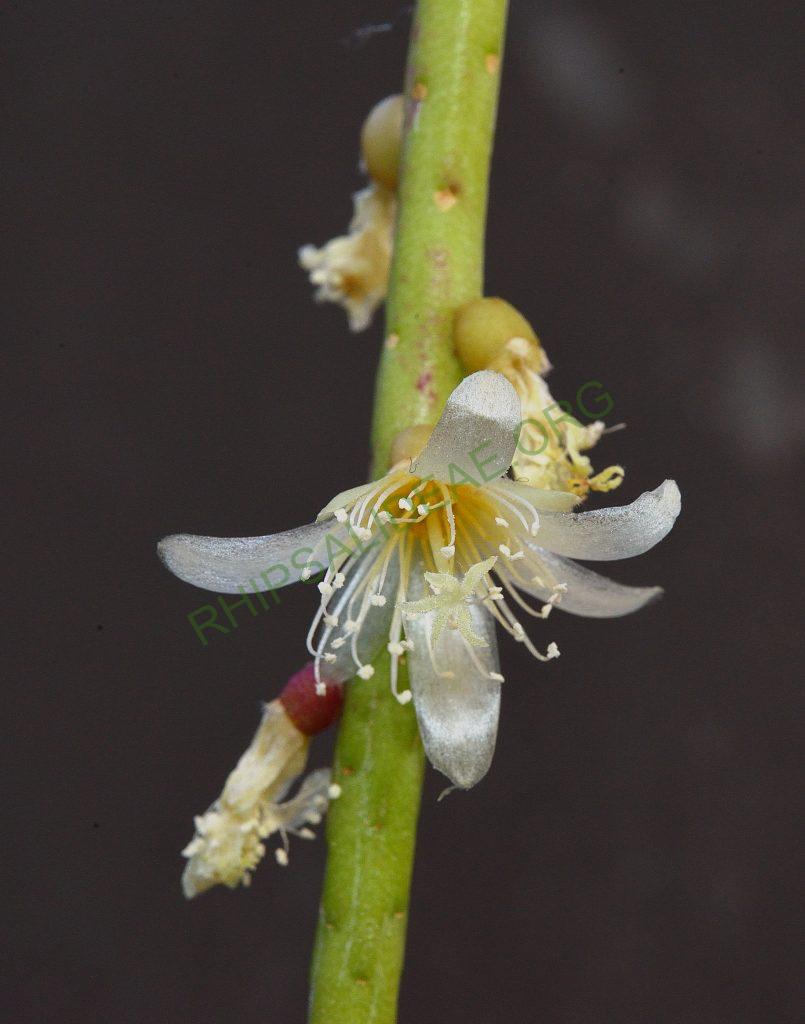
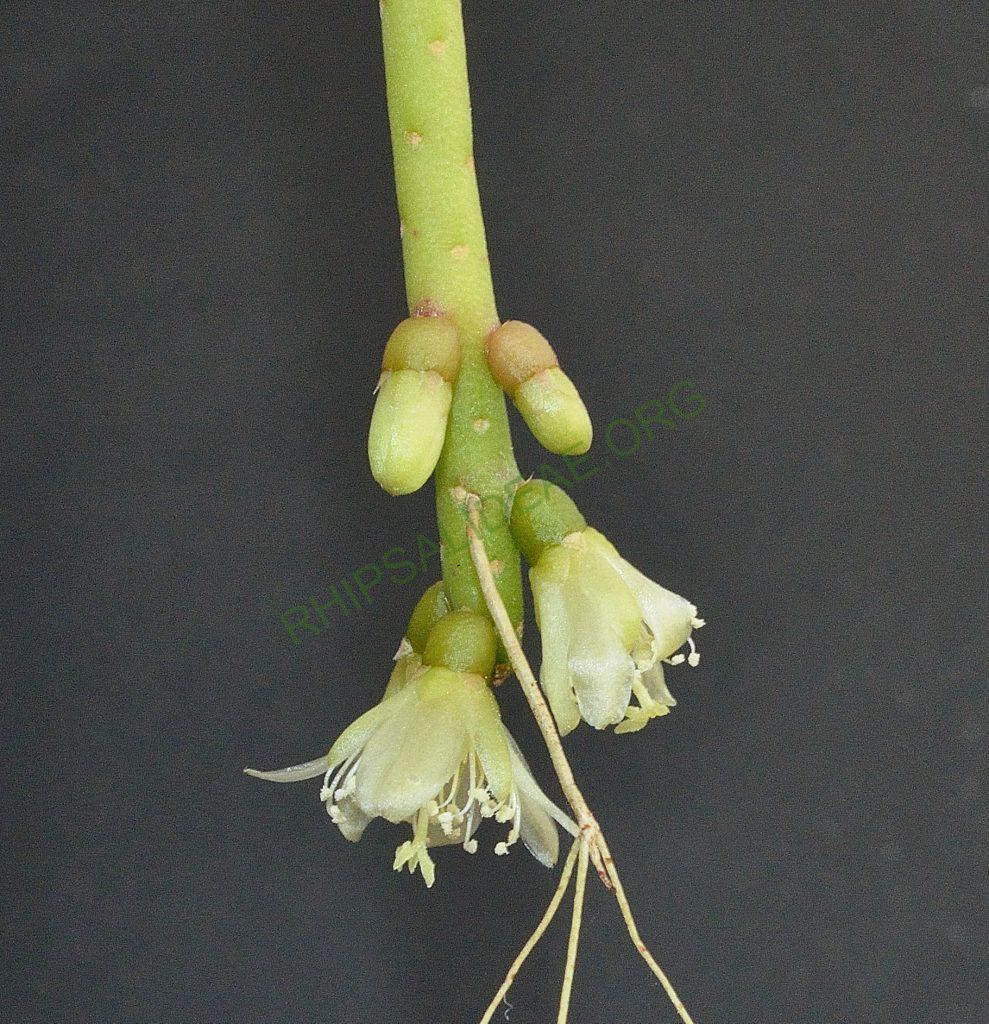


Commercial clone
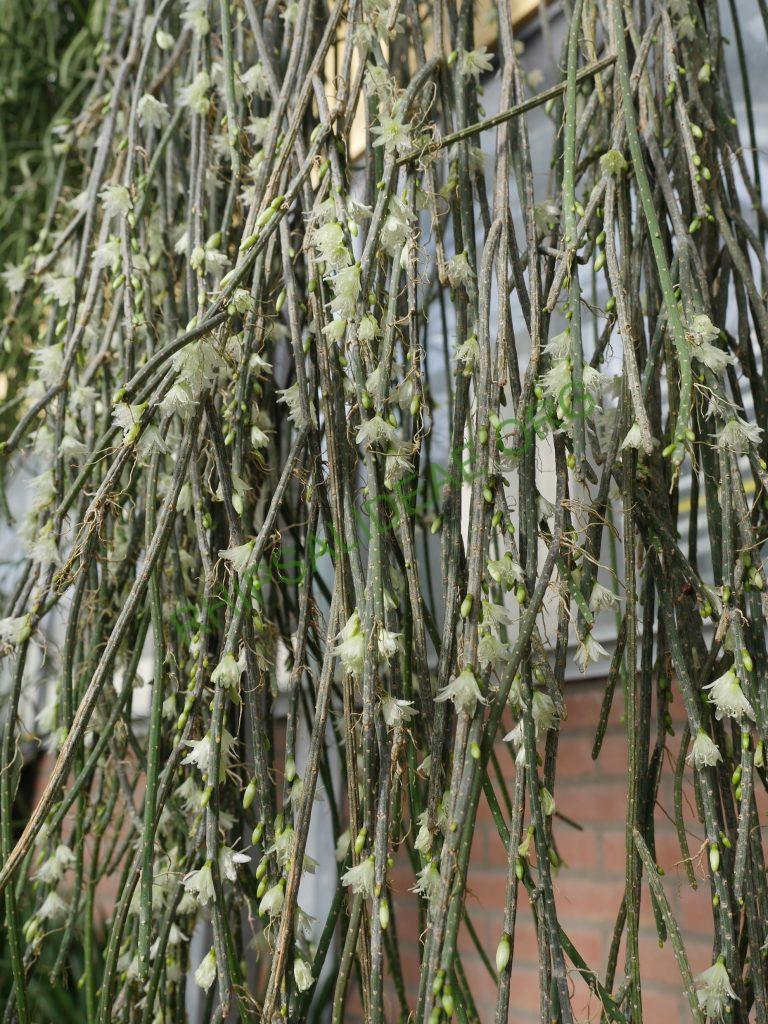
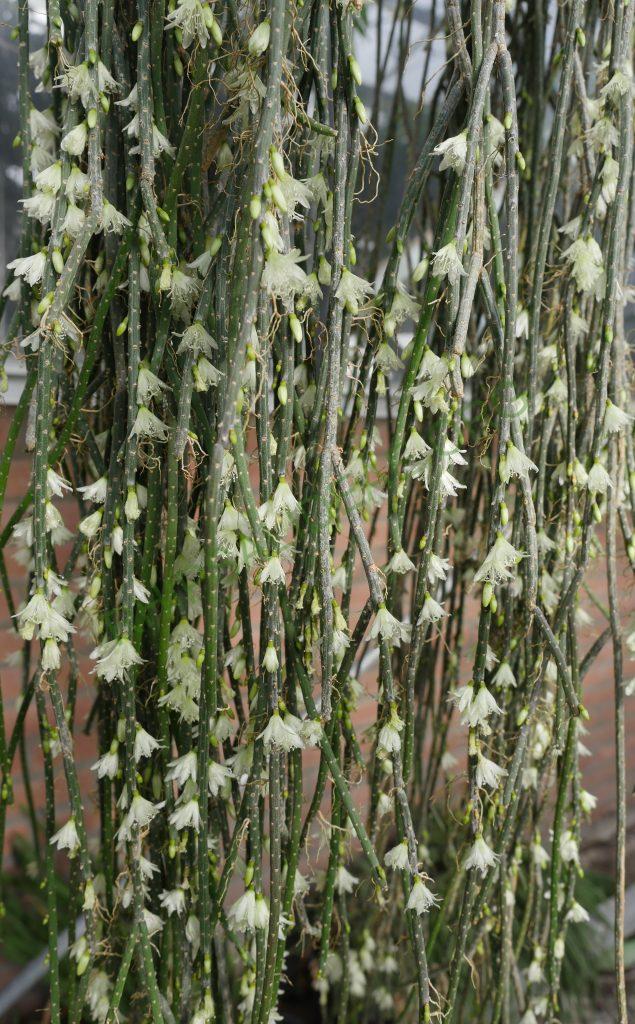
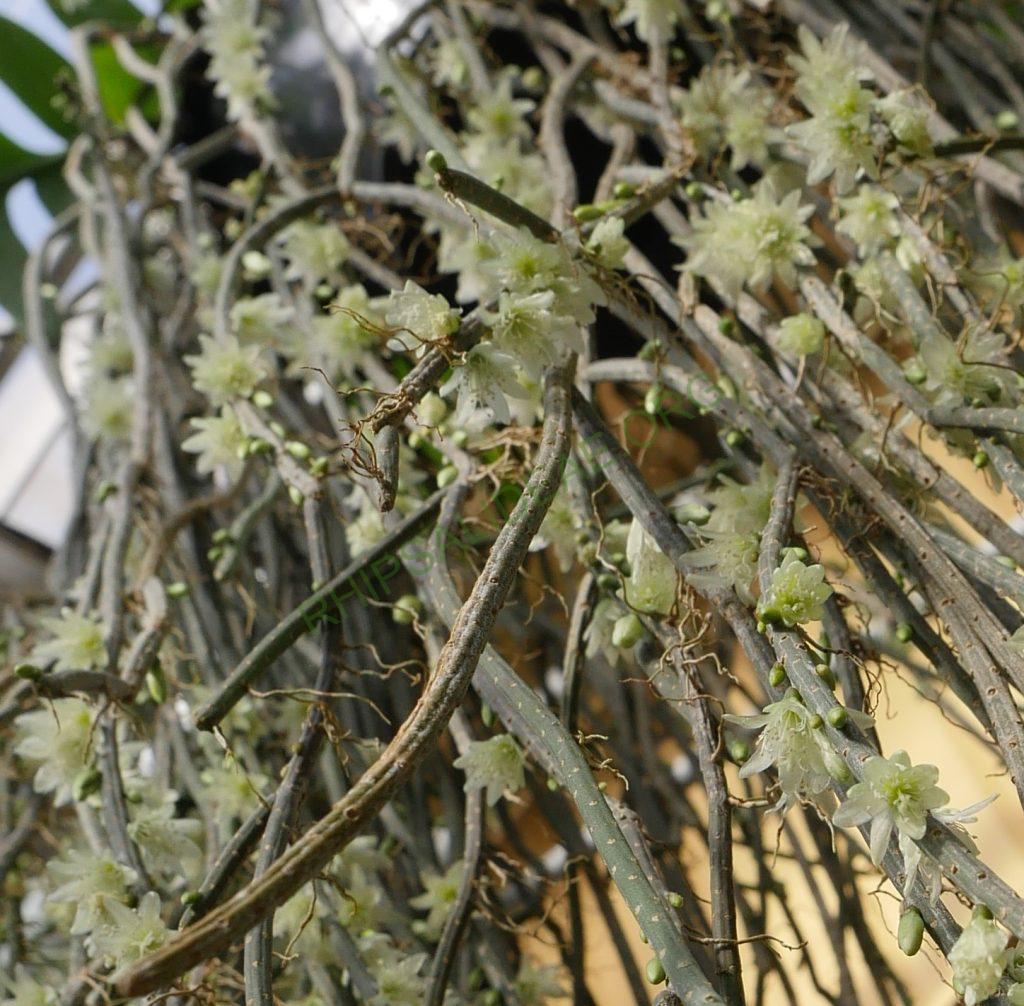
Unknown clone
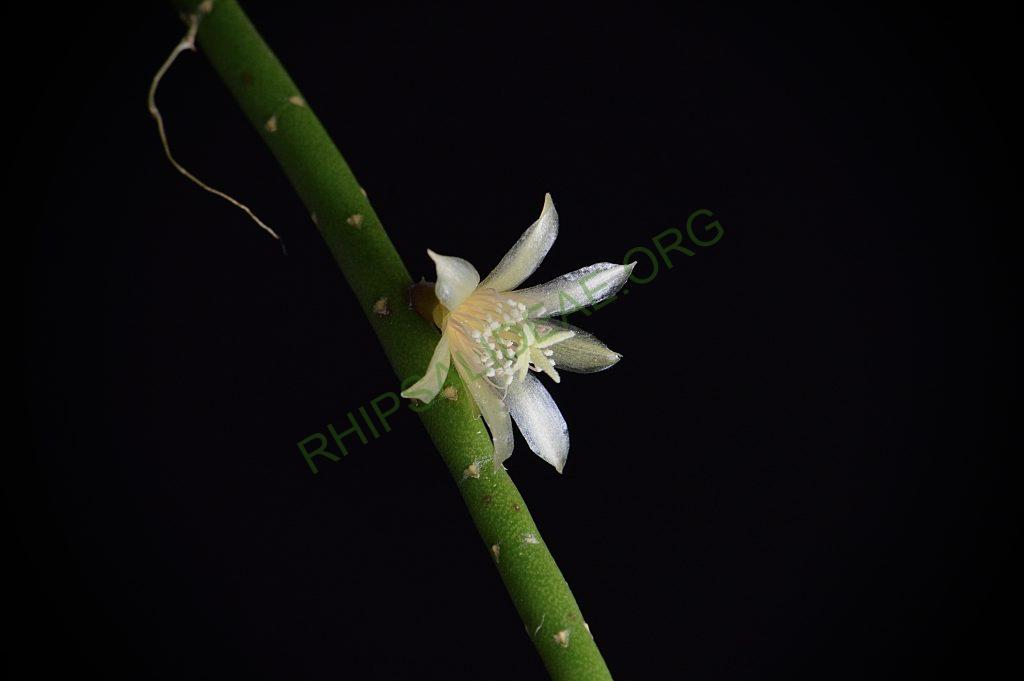
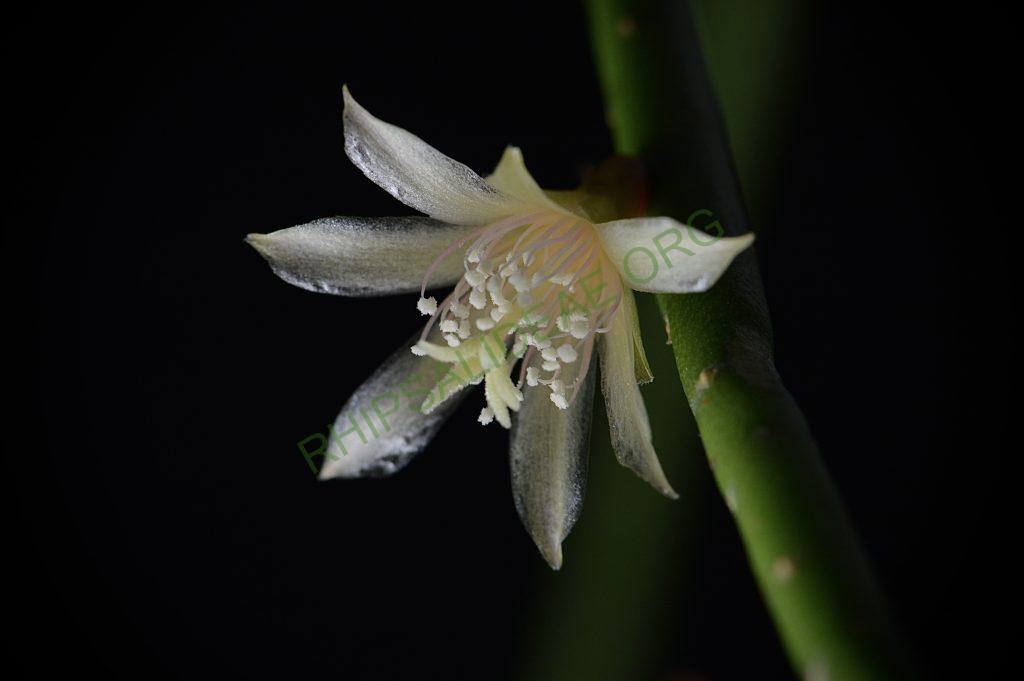

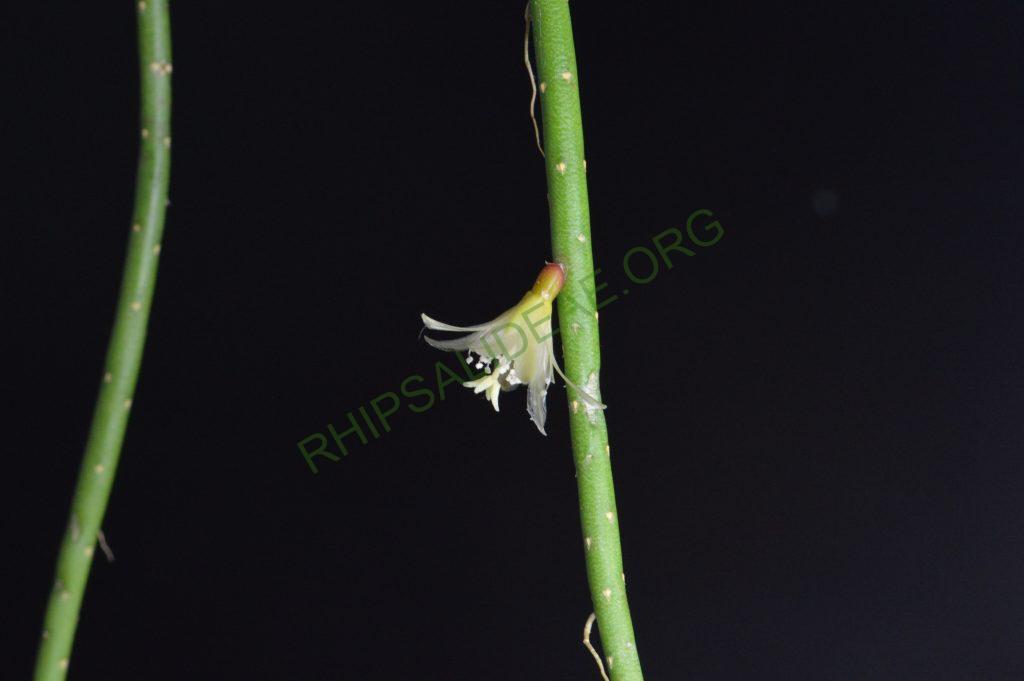
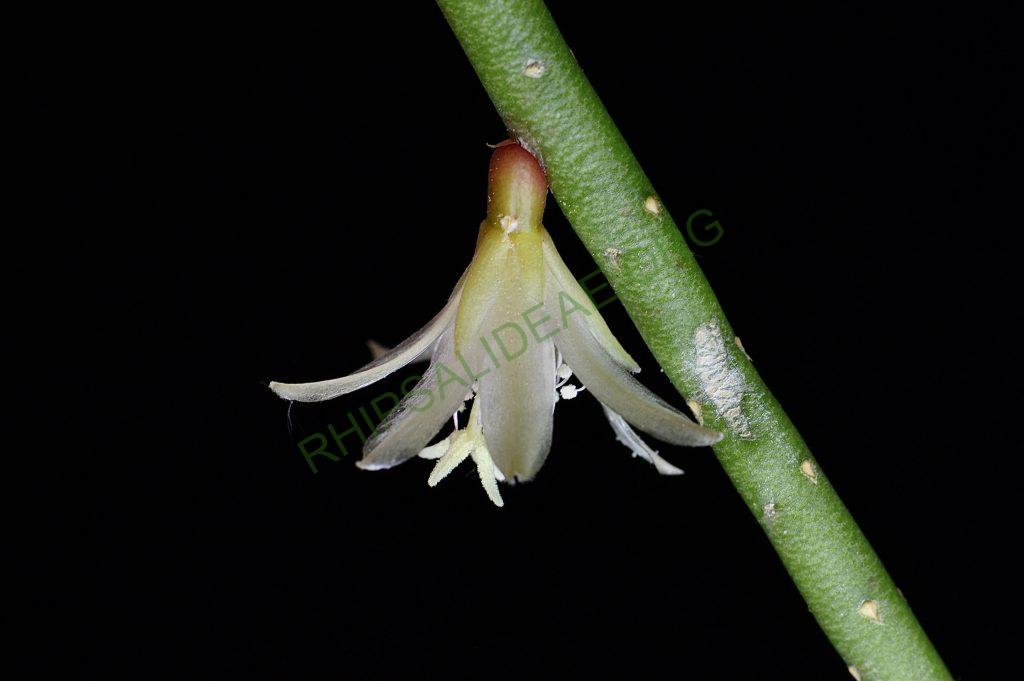
Unknown clone
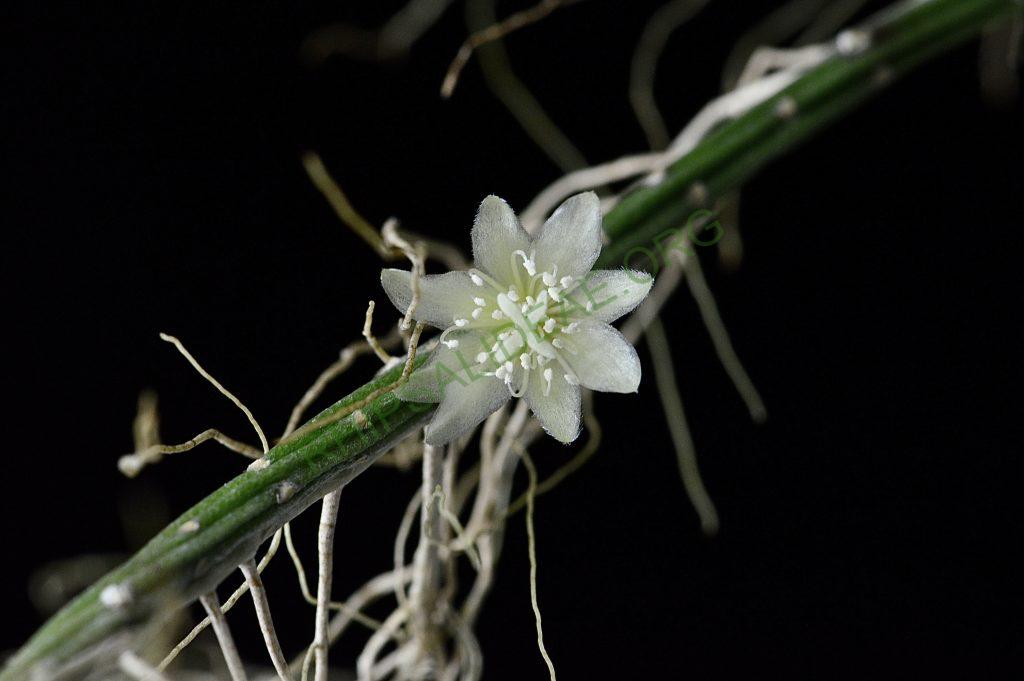
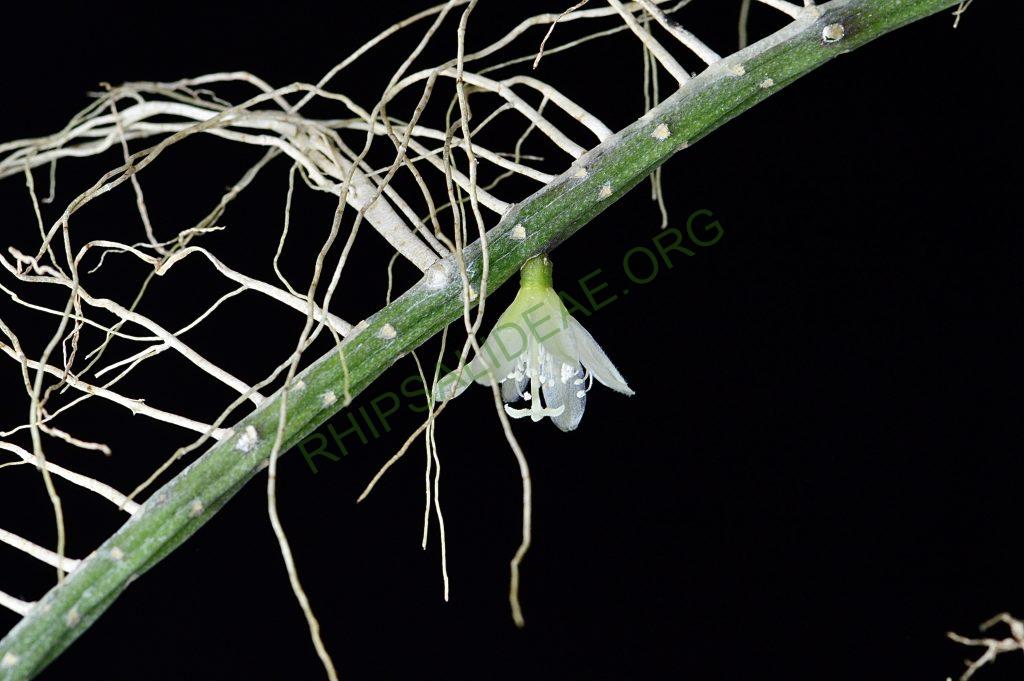
Botanical illustrations and historical images
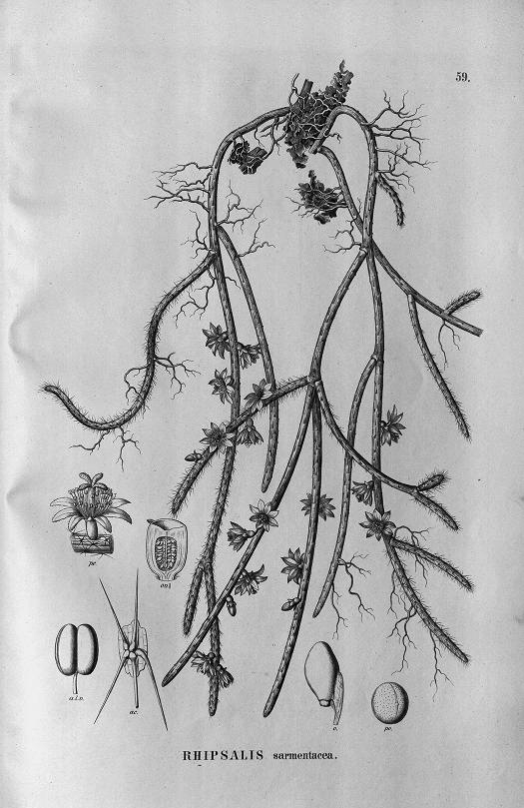
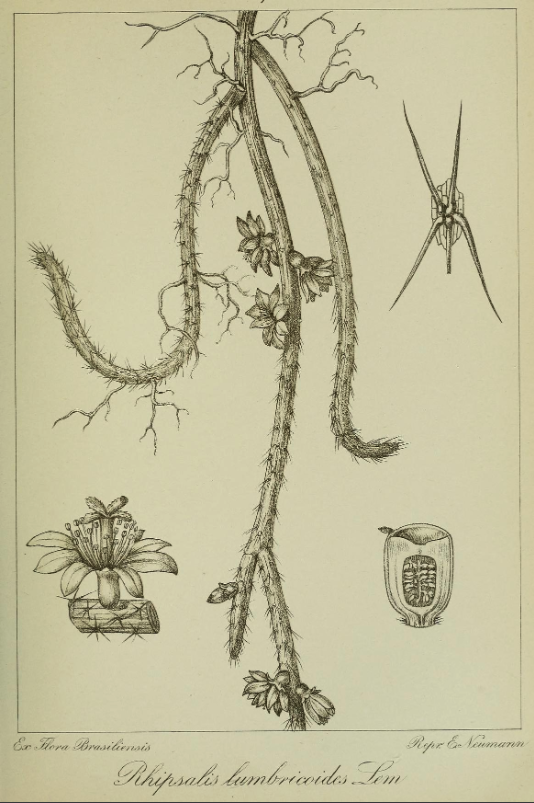
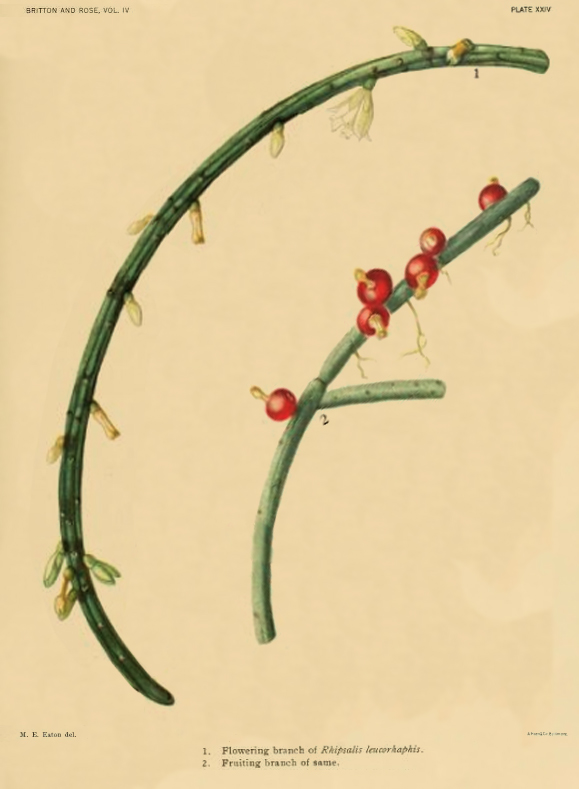
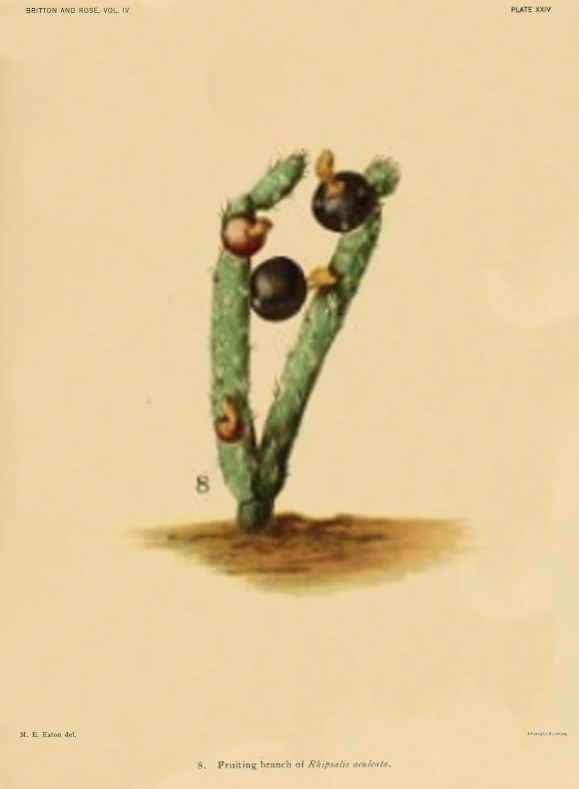
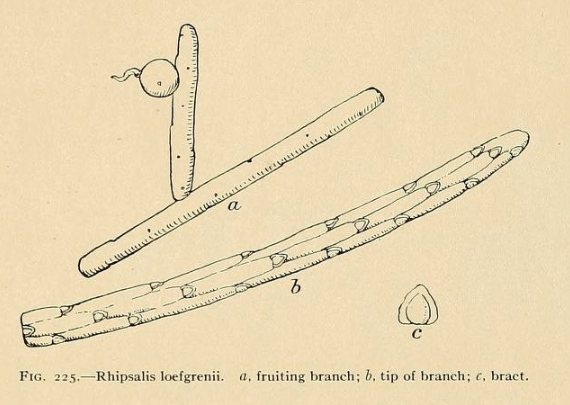
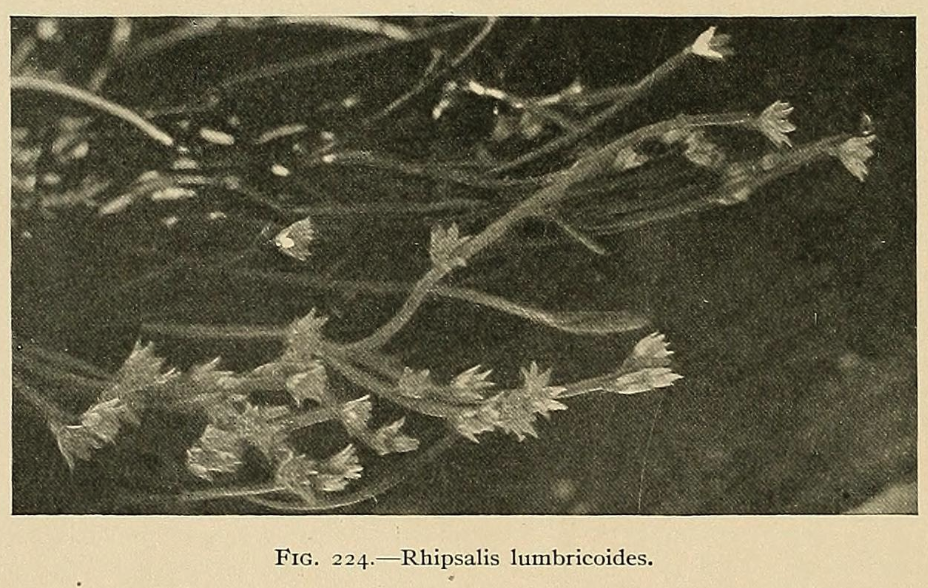
Description
| The accepted name Lepismium lumbricoides f. lumbricoides (Lem.) Barthlott was published in Bradleya 5: 99. 1987. The geographic range is Argentina (Corrientes, Misiones, Santiago del Estero, Catamarca, Buenos Aires, Tucumán, Chaco, Salta, Jujuy, Entre Ríos, Formosa); Bolivia, Plurinational States of; Brazil (Rio Grande do Sul, São Paulo, Paraná, Santa Catarina); Paraguay; Uruguay found at elevations of 0-1900 meters with an endangered status of least concern. Lepismium lumbricoides f. lumbricoides is classified in the subgenus Ophiorhipsalis. Observed growing as an epiphyte or lithophyte. Overall habit is pendant, branches are monomorphic (single stem shape) and subacrotonic or mesotonic (stems form from the tips to middle of previous stems). Stems are round and 4 to 8 angled, bristles are absent to sparse. Main stems are indeterminate (seasonal growth is various lengths), 10cm-80cm x 0.3cm-0.8cm. Flowers are campanulate or infundibuliform (bell or funnel shaped), 0.53cm-2.5cm x 0.4cm-3.5cm. Petals from 5 to 15, sepals from 3 to 6. Inner petals are white, cream, yellow or green, outer petals are white, cream, yellow or green. Stamen are white or green sometimes with a purplish base, from 18 to 36. Stigma lobes from 2 to 6. Flower ovary is cylindrical-angled, 0.2cm-0.5cm x 0.2cm-0.4cm. Flowering position on the stem is lateral and the flower orientation in relation to the stem is oblique. It is unreported whether flowering repeats per areole. A maximum of 2 flowers were reported at a single areole. Areole position in the stems is superficial (flower ovary is visible on the surface of the stems during bud development). Trichomes or wool is absent or sparse at the areoles after flowering. Unripe fruit is green, prink or brown. Ripe fruit is globose or subglobose; pink, maroon, purple or black, 0.5cm-0.79cm x 0.4cm-1cm. Other notable features: Resembles some Rhipsalis species when not in flower, but is easy to distinguish by the prominent triangular scales at the areoles. Often younger growth is covered in soft spines that radiate out from the areoles. Taxonomic treatment and description were derived from:
|
Lepismium lumbricoides f. lumbricoides referenced publications
| Title | Authors | Type | Journal | Year | Volume | Issue | Pages | Publisher |
|---|---|---|---|---|---|---|---|---|
| Epifytische cactussen, rhipsalis.eu. Accessed on: 15 Jan. 2025 | Aat van Uijen | Website | 2025 | |||||
| Royal Botanic Gardens Kew | Plants of the World Online. Accessed on: 15 Jan. 2025 | Website | 2025 | ||||||
| The Caryophyllales Network 2015+ [continuously updated]: A global synthesis of species diversity in the angiosperm order Caryophyllales. Accessed on: 15 Jan. 2025 | Website | 2025 | ||||||
| WFO The World Flora Online. Accessed on: 15 Jan. 2025 | Website | 2025 | ||||||
| The IUCN Red List of Threatened Species. Version 2024-2. accessed on 2025-01-07 | Website | 2024 | ||||||
| Cactaceae at Caryophyllales.org – a dynamic online species-level taxonomic backbone for the family | Nadja Korotkova, David Aquino, Salvador Arias, Urs Eggli, Alan Franck, Carlos Gómez-Hinostrosa, Pablo C. Guerrero, Héctor M. Hernández, Andreas Kohlbecker, Matias Köhler, Katja Luther, Lucas C. Majure, Andreas Müller, Detlev Metzing, Reto Nyffeler, Daniel Sánchez, Boris Schlumpberger, Walter G. Berendsohn | Journal Article | Willdenowia | 2021 | 51 | 2 | 251 – 270 | Botanic Garden and Botanical Museum Berlin (BGBM) |
| Biodiversidad De La Flora Vascular De La Provincia De Misiones, Región Paranaense Argentina | Christian A. Zanotti, Héctor A. Keller, Fernando O. Zuloaga | Journal Article | Darwiniana | 2020 | 8 | 1 | 129 | |
| Cactaceae na Serra da Mantiqueira, Brasil | Diego Rafael Gonzaga, Luiz Menini Neto, Ariane Luna Peixoto | Journal Article | Rodriguésia | 2020 | 71 | |||
| Rhipsalis agudoensis - a mystery solved | Nigel P. Taylor, Andreas Hofacker | Journal Article | Bradleya | 2017 | 2017 | 35 | 248 – 251 | British Cactus and Succulent Society |
| Molecular cytogenetic insights into the evolution of the epiphytic genus Lepismium (Cactaceae) and related genera | Natalia C. Moreno, Leonardo D. Amarilla, María L. Las Peñas, Gabriel Bernardello | Journal Article | Botanical Journal of the Linnean Society | 2015 | 177 | 2 | 263-277 | |
| Cactaceae in the state of Paraná, Brasil | André Soller, Patricia Soffiatti, Alice Calvente, Renato Goldenberg | Journal Article | Rodriguésia | 2014 | 65 | 201-219 | ||
| Phylogeny and evolution of the epiphytic Rhipsalideae (Cactaceae) | Nadja Korotkova | Ph.D. Thesis | 2012 | Rheinische Friedrich-Wilhelms-Universität Bonn | ||||
| Molecular phylogeny of tribe Rhipsalideae (Cactaceae) and taxonomic implications for Schlumbergera and Hatiora | Alice Calvente, Daniela C. Zappi, Félix Forest, Lúcia G. Lohmann | Journal Article | Molecular Phylogenetics and Evolution | 2011 | 58 | 3 | 456-468 | |
| What does it take to resolve relationship and to identify species with molecular markers? An example from the epiphytic Rhipsalideae (Cactaceae) | Nadja Korotkova, Borsch T, Dietmar Quandt, Nigel P. Taylor, Müller K, Wilhelm Barthlott | Journal Article | American Journal of Botany | 2011 | 98 | 1549-1572 | ||
| Functional morphology of two Lepismium species (Rhipsalideae, Cactaceae) | María Regina Torres-Boeger, Patricia Soffiatti, Marco Antônio Gomes-Souto, Márcia Budchen, Katiane Paula Bagatini, Manuela Dal Forno | Journal Article | Revista Mexicana de Biodiversidad | 2010 | 81 | 2 | 393–400 | Instituto de Biología, UNAM |
| Molecular phylogeny, evolution and systematics of Rhipsalis (Cactaceae) | Alice Calvente | Ph.D. Thesis | 2010 | Instituto de Biociências da Universidade de São Paulo | ||||
| Taxonomy and Distribution Of Epiphytic Cacti In Uruguay—Notes Towards A Checklist Of Cactaceae Of Uruguay, Part 3 | Urs Eggli, Eduardo Marchesi, Mauricio Bonifacino, Reto Nyffeler | Journal Article | Haseltonia | 2008 | 14 | 161-169 | Cactus and Succulent Society of America | |
| Cactaceae | Daniela C. Zappi, Lidyanne Yuriko Saleme Aona, Nigel P. Taylor | Journal Article | Flora Fanerogâmica do Estado de São Paulo | 2007 | 5 | 180-193 | ||
| The New Cactus Lexicon: Atlas of illustrations | David Hunt, Nigel P. Taylor, Graham Charles | Book | 2006 | 104-120 | DH Books | |||
| The New Cactus Lexicon: Text | David Hunt, Nigel P. Taylor, Graham Charles | Book | 2006 | 138-139,142-143,253-257 | DH Books | |||
| The pendent cacti of Brazil | Pierre J. Braun, Andreas Hofacker | Journal Article | Cacti and Succulent Journal | 2006 | 78 | 6 | 286-299 | Cactus and Succulent Society of America |
| Lepismium lumbricoides (Lemaire) Barthlott | Andreas Hofacker | Journal Article | Kakteen und andere Sukkulenten | 2005 | 56 | 12 | XLVII-XLVIII | |
| Ecology, biogeography and diversity of the Bolivian epiphytic cacti — with the description of two new taxa | Pierre Ibisch, Michael Kessler, Christoph Nowicki, Wilhelm Barthlott | Journal Article | Bradleya | 2000 | 18 | 2-30, 120, 247-249 | British Cactus and Succulent Society | |
| Blütenwunder aus den Yungas: Die Gattung Lepismium Pfeiffer | Ralf Bauer | Journal Article | Kakteen und andere Sukkulenten | 1998 | 49 | 1 | 1-8 | |
| Boliviens epiphytische Kakteen und ihre ökologische und geographische Verbreitung. Teil 2 | Pierre Ibisch | Journal Article | EPIG | 1998 | 10 | 1 | 3-12 | |
| Boliviens epiphytische Kakteen und ihre ökologische und geographische Verbreitung. Teil 4 | Pierre Ibisch | Journal Article | EPIG | 1998 | 10 | 3 | 75-84 | |
| Boliviens epiphytische Kakteen und ihre ökologische und geographische Verbreitung. Teil 1 | Pierre Ibisch | Journal Article | EPIG | 1997 | 9 | 4 | 131 | |
| Die Namen der Gattungen und Arten epiphytischer Kakteen. Teil 1. Rhipsalideae | Ralf Bauer | Journal Article | EPIG | 1996 | 8 | 2 | 47-51 | |
| Cactaceae of South America: The Ritter Collections | Urs Eggli, Mélica Muñoz Schick, Beat Ernst Leuenberger | Book | Englera | 1995 | 16 | 15, 27, 42, 51, 58, 61, 73-74, 111, 220, 240-242, 271, 412, 431, 451-453, 488, 503-504, 507, 513, 515-516, 522-523, 566, 579 | ||
| Notes towards a Monograph of Rhipsalideae (Cactaceae) | Wilhelm Barthlott, Nigel P. Taylor | Journal Article | Bradleya | 1995 | 13 | 43-79 | British Cactus and Succulent Society | |
| Bericht über zwei Vorträge von Myron Kimnach und Prof. Dr. Wilhelm Barthlott über ihre Ansichten zur Gattungsgliederung innerhalb der epiphytischen Kakteen | Ralf Bauer | Journal Article | EPIG | 1991 | 3 | 4 | 64-71 | |
| Iii. Unterfamilie Cereoideae K. Schum. 1898 | Friedrich Ritter | Journal Article | Kakteen in Südamerika | 1979 | 20 | 1 | 36-47 | |
| Cactus Lexicon | Curt Backeberg, Walther Haage | Book | 1966 | 205,220-222,440-449, 647, 750 | Blandford Press Ltd. (1966-1973) | |||
| Genera et Species Plantarum Argentinarum | A. Castellanos, H. V. Lelong | Book | 1943 | 1 | 51 | |||
| The Cactaceae : descriptions and illustrations of plants of the cactus family | Nathaniel Lord Britton, Mary E. Eaton, N. J. Rose, Helen Adelaide Wood | Book | 1923 | 4 | 208-247 | Carnegie Institution of Washington | ||
| Handbuch der Kakteenkultur : kurze Beschreibung der meisten gegenwärtig im Handel befindlichen Kakteen, nebst Angabe zu deren Pflege für Gärtner und Kakteenliebhaber zusammengestellt | Ernst Schelle | Book | 1907 | 226-233 | Stuttgart, E. Ulmer, 1907 | |||
| Monatsschrift für Kakteenkunde | Book | 1903 | 13 | 52-57 | Neudamm, J. Neumann | |||
| Gesamtbeschreibung der Kakteen (Monographia cactacearum) | Karl Schumann, Karl Hirscht | Book | 1899 | 618-650 | Neudamm [Dębno, Poland?], J. Neumann, 1899 | |||
| Dictionnaire d'horticulture illustré | D. Bois | Book | 1893 | 1045-1048 | P. Klincksieck | |||
| Revisio generum plantarum vascularium omnium atque cellularium multarum secundum leges nomenclaturae internationales cum enumeratione plantarum exoticarum in itinere mundi collectarum, mit erläuterungen | Otto Kuntze | Book | 1891 | 1 | 261 | A. Felix | ||
| Carl Friedrich Forster's Handbuch der Cacteenkunde in ihrem ganzen Umfange :nach dem gegenwartigen Stande der Wissenschaft bearbeitet und durch die seit 1846 begrundetet Gattungen und neu eingefuhrten Arten vermehrt | Carl Friedrich Förster, Theodor Rümpler | Book | 1886 | 2 | 878-893 | Leipzig, Wöller, 1886 | ||
| Cactaceous plants: their history and culture | R. Lewis Castle | Book | 1884 | 71-75 | Horticultural Press | |||
| Cactaceous Plants | R. Lewis Castle | Journal Article | The journal of horticulture and cottage gardener | 1884 | 9 | 333-334 | ||
| Anales de la Sociedad Científica Argentina | Sociedad Científica Argentina, Congreso Científico Latino Americano, Congreso Científico Internacional Americano, Congreso Científico Internacional Americano (Buenos Aires - Argentina) | Book | 1876 | 99 | 144-117 | Sociedad Científica Argentina | ||
| Flora Brasiliensis, enumeratio plantarum in Brasilia hactenus detectarum :quas suis aliorumque botanicorum studiis descriptas et methodo naturali digestas partim icone illustratas | Karl Friedrich Philipp von Martius, August Wilhelm Eichler, Ignaz Urban, Stephan Endlicher, Eduard Fenzl, Benj. Mary, R. Oldenburg | Book | 1869 | 4 | 2 | 266-300 | Monachii et Lipsiae [Munich & Leipzig], R. Oldenbourg, 1840-1906 | |
| Cacteae in horto Dyckensi cultae anno 1849, secundum tribus et genera digestae : additis adnotationibus botanicis characteribusque specierum in enumeratione diagnostica cactearum Doct. Pfeifferi non descriptarum | Joseph Salm-Reifferscheidt | Book | 1850 | 58-62 | Bonnae, Apud Henry & Cohen, typis C. Georgii, 1850 | |||
| Flore des jardins et des grandes cultures, ou Description des plantes de jardins, d'orangeries et des grandes cultures, leur multiplication, l'epoque de leur fleuraison et de leur fructification, et leur emploi, avec planches gravées, dont une coloriée | Nicolas Charles Seringe | Book | 1849 | 350-359 | Lyon, C. Savy, jeune, 1849 | |||
| Handbuch der Cacteenkunde in ihrem ganzen Umfange. Oder die erfolgreichsten, auf die neuesten Erfahrungen gegrundeten Kultruangaben, sowie ausführliche und genaue Beschreibung und berichtigte Synonymik sämmtlicher bis jetzt bekannt gewordener Cacteen, und überhaupt alles in Bezug auf diese Pflanzenfamilie sonst nur Wissenswerthe. Auf den Grund langjähriger eigener und fremder Erfahrungen | Carl Friedrich Förster | Book | 1846 | 447-462 | Leipzig, J.T. Wöller, 1846 | |||
| Cacteæ in horto dyckensi cultæ anno 1844 | Joseph Salm-Reifferscheidt | Book | 1845 | 38-40 | E. Typis Crapelet | |||
| Repertorium botanices systematicae | Wilhelm Gerhard Walpers | Book | 1842 | 2 | 342-345 | Sumtibus Friderici Hofmeister | ||
| Nomenclator botanicus hortensis... | Gustav Heynhold | Book | 1840 | 2 | 98-99 | Arnoldischen Buchhandlung | ||
| Nouvelle Espèce de Rhipsalis (Hariota), Par MM. F. Otto et Alb. Dietrich. (Atig. Gartenz., mars 1841.) | Charles Lemaire | Journal Article | Herbier General de l’Amateur | 1834 | 3 | 2 | 4-5 | |
| Die Gartenwelt | Max Hesdörffer | Book | 1897 | 13 | 117 | G. Schmidt |
Reduced Synonyms
| Name | Reduced by | Published Date | Published In |
|---|---|---|---|
| Cereus lumbricoides Lem. | Barthlott (1987) | 1839 | Cact. Gen. Sp. Nov.: 60. 1839 |
| Rhipsalis lumbricoides (Lem.) Lem. | Barthlott & Taylor (1995) | 1859 | Ill. Hort. 6(Misc.): 68. 1859 |
| Ophiorhipsalis lumbricoides (Lem.) Doweld | IPNI | 2002 | Sukkulenty 4(1-2): 39. 2002 ["2001"] |
| Hariota lumbricalis Kuntze | 1891 | Revis. Gen. Pl. 1: 262. 1891 | |
| Rhipsalis sarmentacea Otto & A.Dietr. | Barthlott & Taylor (1995) | 1841 | Allg. Gartenzeitung 9: 98. 1841 |
| Lepismium sarmentaceum (Otto & A.Dietr.) Vöcht. | Barthlott & Taylor (1995) | 1873 | Jahrb. Wiss. Bot. Leipzig 9: 399. 1873 |
| Hariota sarmentacea (Otto & A.Dietr.) Kuntze | Barthlott & Taylor (1995) | 1898 | Revis. Gen. Pl. 3(3): 107. 1898 |
| Rhipsalis leucorhaphis K.Schum. | Barthlott & Taylor (1995) | 1900 | Monatsschr. Kakteenk. 10: 125. 1900 |
| Rhipsalis lumbricoides var. leucorhaphis (K.Schum.) F.Ritter | Korotkova (2021) | 1979 | Kakteen Südamerika 1: 247. 1979 |
| Rhipsalis novaesii Loefgr. | Barthlott & Taylor (1995) | 1915 | Arch. Jard. Bot. Rio de Janeiro 1: 69. 1915 |
| Rhipsalis loefgrenii Britton & Rose | Barthlott & Taylor (1995) | 1923 | Cactaceae 4: 232. 1923 |
| Rhipsalis bauchienii Guillaumin & Poup. | Barthlott & Taylor (1995) | 1932 | Bull. Mus. Natl. Hist. Nat., sér. 2, 4: 1024. 1932 |