
Lepismium lumbricoides f. aculeatum (F.A.C.Weber) Barthlott
Images | Description | Publications | Reduced Synonyms
La Banda, Santiago del Estero, Argentina
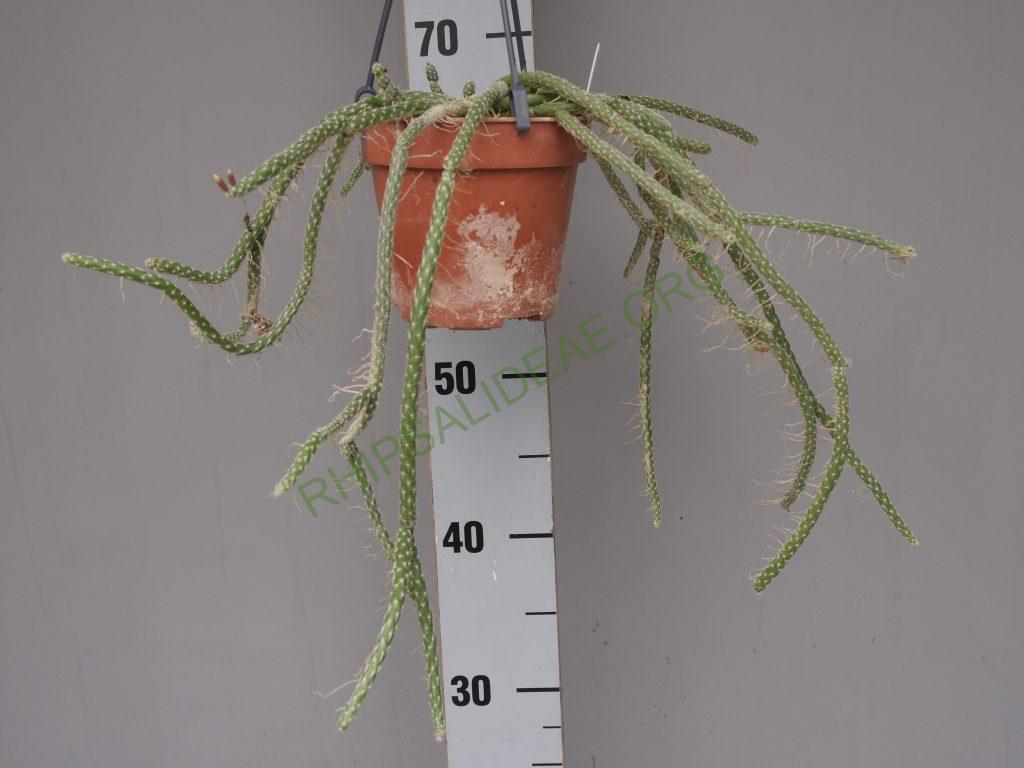


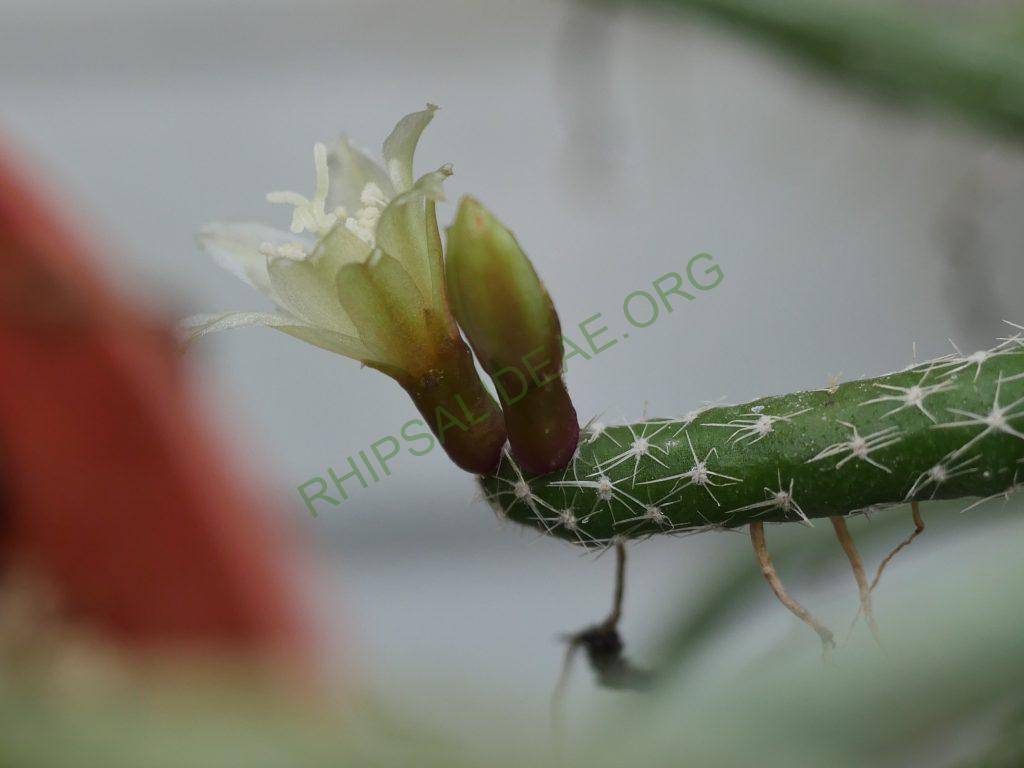


Argentina

Santa Fe, Argentina


Heidelberg Botanical Garden

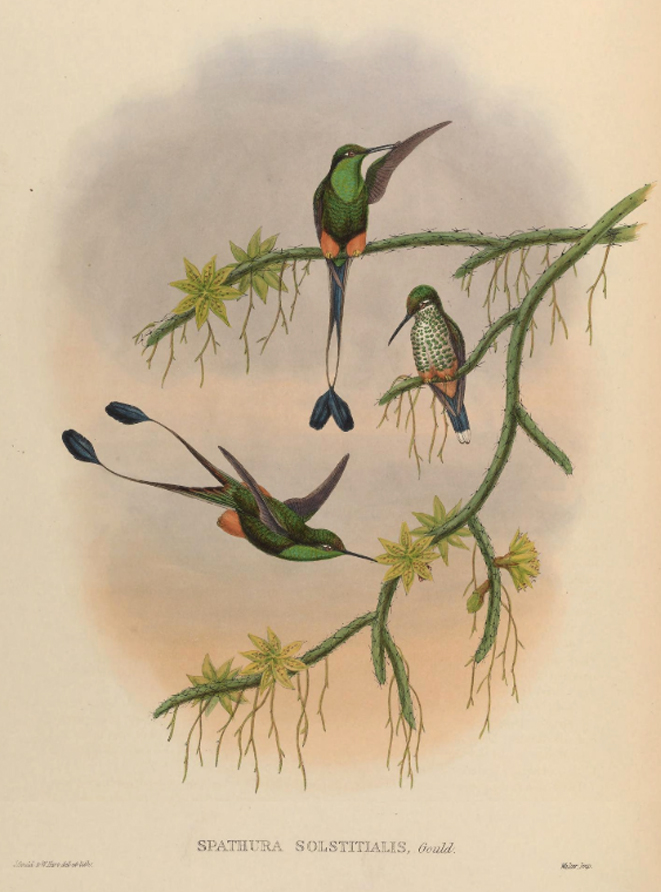
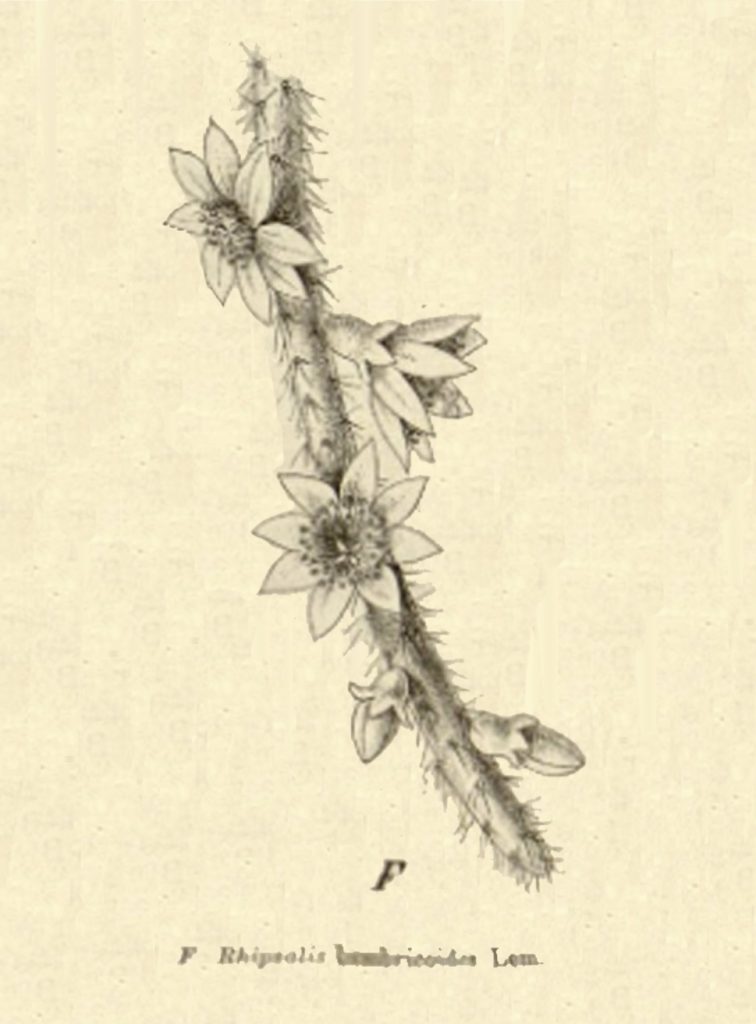
Botanical illustrations and historical images
Description
| The accepted name Lepismium lumbricoides f. aculeatum (F.A.C.Weber) Barthlott was published in Barthlott & N.P.Taylor in Bradleya 13: 48. 1995. The geographic range is north-western Argentina found at elevations of unreported meters with an endangered status of least concern. Lepismium lumbricoides f. aculeatum is classified in the subgenus Ophiorhipsalis. Observed growing as an epiphyte or lithophyte. Overall habit is pendant, branches are monomorphic (single stem shape) and subacrotonic or mesotonic (stems form from the tips to middle of previous stems). Stems are round and 8 to 10 angled, bristles are sparse to dense. Main stems are indeterminate (seasonal growth is various lengths), unreported x 0.3cm-0.4cm. Flowers are campanulate or infundibuliform (bell or funnel shaped), 1.3cm-2.4cm x 1.5cm-2cm. Petals 7, sepal count is unreported. Inner petals are white, yellow or pink, outer petals are white, yellow, green, pink or purple. Stamen are white, from 20 to 60. Stigma lobes from 3 to 8. Flower ovary is cylindrical-angled, 0.4cm-0.7cm x 0.3cm-0.35cm. Flowering position on the stem is lateral and the flower orientation in relation to the stem is oblique. It is unreported whether flowering repeats per areole. A maximum of 1 flowers were reported at a single areole. Areole position in the stems is superficial (flower ovary is visible on the surface of the stems during bud development). Trichomes or wool is absent or sparse at the areoles after flowering. Unripe fruit is purple. Ripe fruit is globose or subglobose; maroon, purple or black, 0.6cm-0.8cm x 0.5cm-0.8cm. Other notable features: Resembles some Rhipsalis species when not in flower, easy to distinguish by the prominent triangular scales at the areoles. Form is described as being distinguishable from L. lumbricoides f. lumbricoides by the stiffer spines that radiate out from each areole and do not fall of with age. Spines were sometimes described as yellow. Taxonomic treatment and description were derived from:
|
Lepismium lumbricoides f. aculeatum referenced publications
| Title | Authors | Type | Journal | Year | Volume | Issue | Pages | Publisher |
|---|---|---|---|---|---|---|---|---|
| Epifytische cactussen, rhipsalis.eu. Accessed on: 15 Jan. 2025 | Aat van Uijen | Website | 2025 | |||||
| IPCN Chromosome Reports. Missouri Botanical Garden. Accessed on: 18 Jan. 2025 | Website | 2025 | ||||||
| Royal Botanic Gardens Kew | Plants of the World Online. Accessed on: 15 Jan. 2025 | Website | 2025 | ||||||
| The Caryophyllales Network 2015+ [continuously updated]: A global synthesis of species diversity in the angiosperm order Caryophyllales. Accessed on: 15 Jan. 2025 | Website | 2025 | ||||||
| WFO The World Flora Online. Accessed on: 15 Jan. 2025 | Website | 2025 | ||||||
| Cactaceae at Caryophyllales.org – a dynamic online species-level taxonomic backbone for the family | Nadja Korotkova, David Aquino, Salvador Arias, Urs Eggli, Alan Franck, Carlos Gómez-Hinostrosa, Pablo C. Guerrero, Héctor M. Hernández, Andreas Kohlbecker, Matias Köhler, Katja Luther, Lucas C. Majure, Andreas Müller, Detlev Metzing, Reto Nyffeler, Daniel Sánchez, Boris Schlumpberger, Walter G. Berendsohn | Journal Article | Willdenowia | 2021 | 51 | 2 | 251 – 270 | Botanic Garden and Botanical Museum Berlin (BGBM) |
| Molecular cytogenetic insights into the evolution of the epiphytic genus Lepismium (Cactaceae) and related genera | Natalia C. Moreno, Leonardo D. Amarilla, María L. Las Peñas, Gabriel Bernardello | Journal Article | Botanical Journal of the Linnean Society | 2015 | 177 | 2 | 263-277 | |
| Phylogeny and evolution of the epiphytic Rhipsalideae (Cactaceae) | Nadja Korotkova | Ph.D. Thesis | 2012 | Rheinische Friedrich-Wilhelms-Universität Bonn | ||||
| What does it take to resolve relationship and to identify species with molecular markers? An example from the epiphytic Rhipsalideae (Cactaceae) | Nadja Korotkova, Borsch T, Dietmar Quandt, Nigel P. Taylor, Müller K, Wilhelm Barthlott | Journal Article | American Journal of Botany | 2011 | 98 | 1549-1572 | ||
| The New Cactus Lexicon: Atlas of illustrations | David Hunt, Nigel P. Taylor, Graham Charles | Book | 2006 | 104-120 | DH Books | |||
| The New Cactus Lexicon: Text | David Hunt, Nigel P. Taylor, Graham Charles | Book | 2006 | 138-139,142-143,253-257 | DH Books | |||
| Lepismium lumbricoides (Lemaire) Barthlott | Andreas Hofacker | Journal Article | Kakteen und andere Sukkulenten | 2005 | 56 | 12 | XLVII-XLVIII | |
| Blütenwunder aus den Yungas: Die Gattung Lepismium Pfeiffer | Ralf Bauer | Journal Article | Kakteen und andere Sukkulenten | 1998 | 49 | 1 | 1-8 | |
| Die Namen der Gattungen und Arten epiphytischer Kakteen. Teil 1. Rhipsalideae | Ralf Bauer | Journal Article | EPIG | 1996 | 8 | 2 | 47-51 | |
| Notes towards a Monograph of Rhipsalideae (Cactaceae) | Wilhelm Barthlott, Nigel P. Taylor | Journal Article | Bradleya | 1995 | 13 | 43-79 | British Cactus and Succulent Society | |
| New names in Rhipsalidinae (Cactaceae) | Wilhelm Barthlott | Journal Article | Bradleya | 1987 | 5 | 97-100 | ||
| Chromosome numbers in the tribe Rhipsalinae (Cactaceae) | T. W. J. Gadella, E. Kliphuis, J. Naber | Journal Article | Botaniska notiser | 1979 | 3 | 294 | ||
| Iii. Unterfamilie Cereoideae K. Schum. 1898 | Friedrich Ritter | Journal Article | Kakteen in Südamerika | 1979 | 20 | 1 | 36-47 | |
| Cactus Lexicon | Curt Backeberg, Walther Haage | Book | 1966 | 205,220-222,440-449, 647, 750 | Blandford Press Ltd. (1966-1973) | |||
| Genera et Species Plantarum Argentinarum | A. Castellanos, H. V. Lelong | Book | 1943 | 1 | 51 | |||
| Anales del Museo Nacional de Historia Natural "Bernardino Rivadavia" | Museo Argentino de Ciencias Naturales "Bernardino Rivadavia" | Book | 1923 | 32 | Buenos Aires, Imprenta y Casa Editora Coni | |||
| The Cactaceae : descriptions and illustrations of plants of the cactus family | Nathaniel Lord Britton, Mary E. Eaton, N. J. Rose, Helen Adelaide Wood | Book | 1923 | 4 | 208-247 | Carnegie Institution of Washington | ||
| Gesamtbeschreibung der Kakteen (Monographia cactacearum) | Karl Schumann, Karl Hirscht | Book | 1899 | 618-650 | Neudamm [Dębno, Poland?], J. Neumann, 1899 | |||
| Dictionnaire d'horticulture illustré | D. Bois | Book | 1893 | 1045-1048 | P. Klincksieck | |||
| Anales de la Sociedad Científica Argentina | Sociedad Científica Argentina, Congreso Científico Latino Americano, Congreso Científico Internacional Americano, Congreso Científico Internacional Americano (Buenos Aires - Argentina) | Book | 1876 | 99 | 144-117 | Sociedad Científica Argentina |
Reduced Synonyms
| Name | Reduced by | Published Date | Published In |
|---|---|---|---|
| Rhipsalis aculeata F.A.C.Weber | Barthlott & Taylor (1995) | 1892 | Rev. Hort. (Paris) 64: 428. 1892 |
| Lepismium aculeatum (F.A.C.Weber) Barthlott | Barthlott & Taylor (1995) | 1987 | Bradleya 5: 99. 1987 |
| Rhipsalis lumbricoides var. aculeata (F.A.C.Weber) Kimnach | Korotkova (2021) | 1996 | Cact. Succ. J. (Los Angeles) 68: 156. 1996 |
| Ophiorhipsalis lumbricoides subsp. aculeata (F.A.C.Weber) Doweld | IPNI | 2002 | Sukkulenty 4(1-2): 39. 2002 ["2001"] |