
Rhipsalis cuneata subsp. australis Ralf Bauer
Images | Description | Publications | Reduced Synonyms
Bauer accession number 105: Aguilar s.n.; Bolivia; Cochabamba; Prov. Chapare, km130 of the road to Villa Tunari between Río Cristal Mayu and Chocolatal; = HBG 53082; = ISI 90-28; Holotype plant – material sampled, Molecular Phylogeny, Evolution, and Biogeography of South American Epiphytic Cacti, Alice Calvente, Daniela C. Zappi, Félix Forest, Lúcia G. Lohmann, International Journal of Plant Sciences, 172:7, 2011


Bauer accession number 779: Ibisch & Ibisch 96.0137; Bolivia; Cochabamba; Prov. Chapare, Avispas, near Río Espíritu Santo, S17°1′ W65°32′, 450m; = BG Bonn 14626


Unknown clone

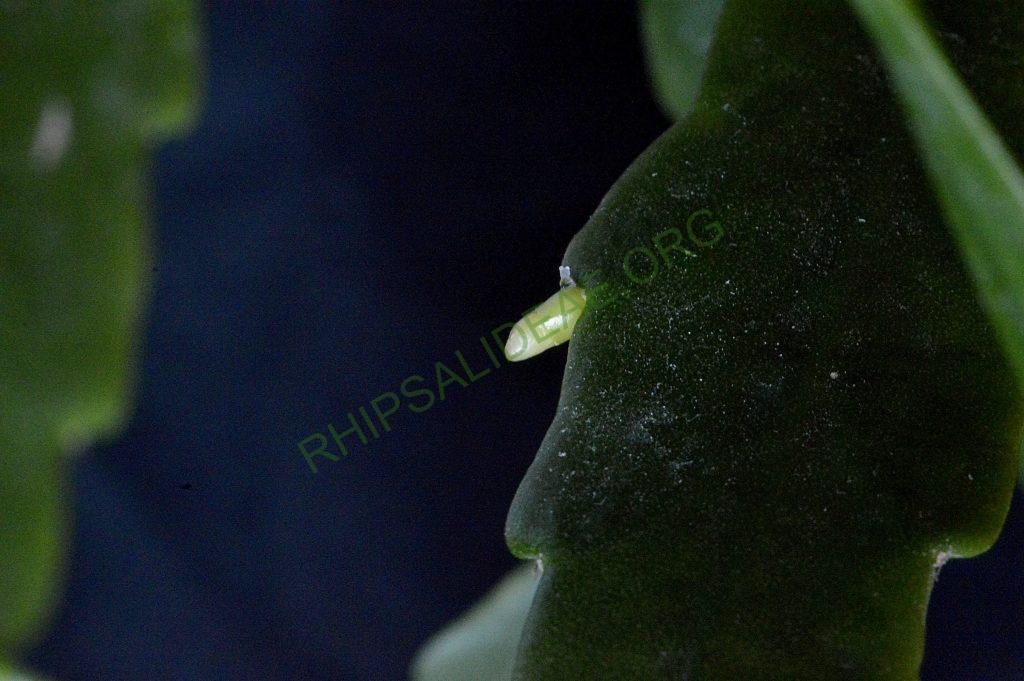

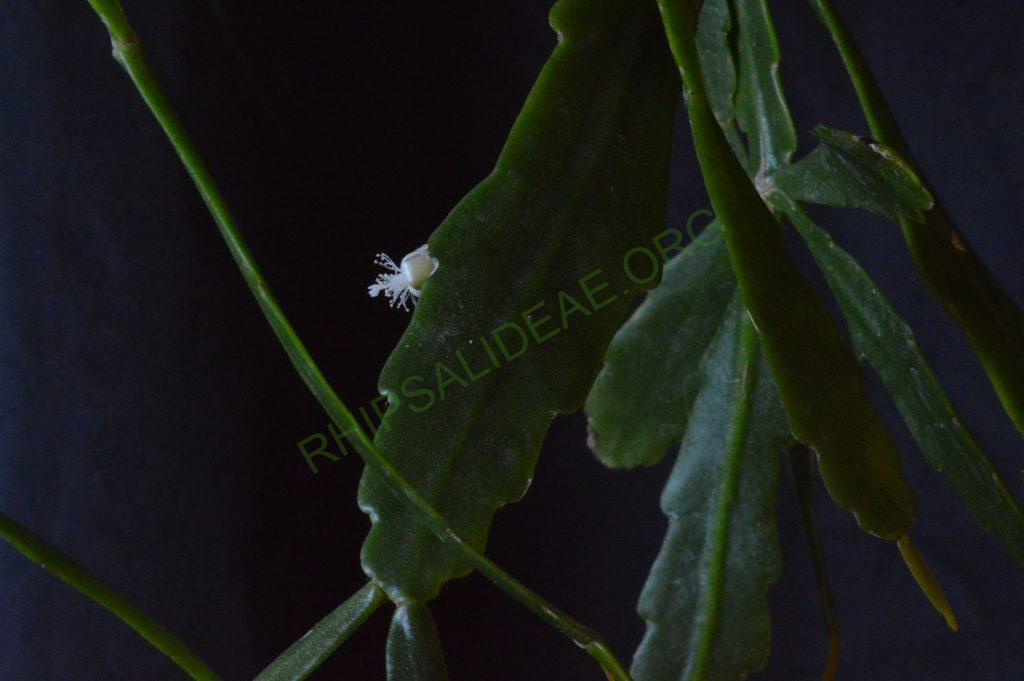
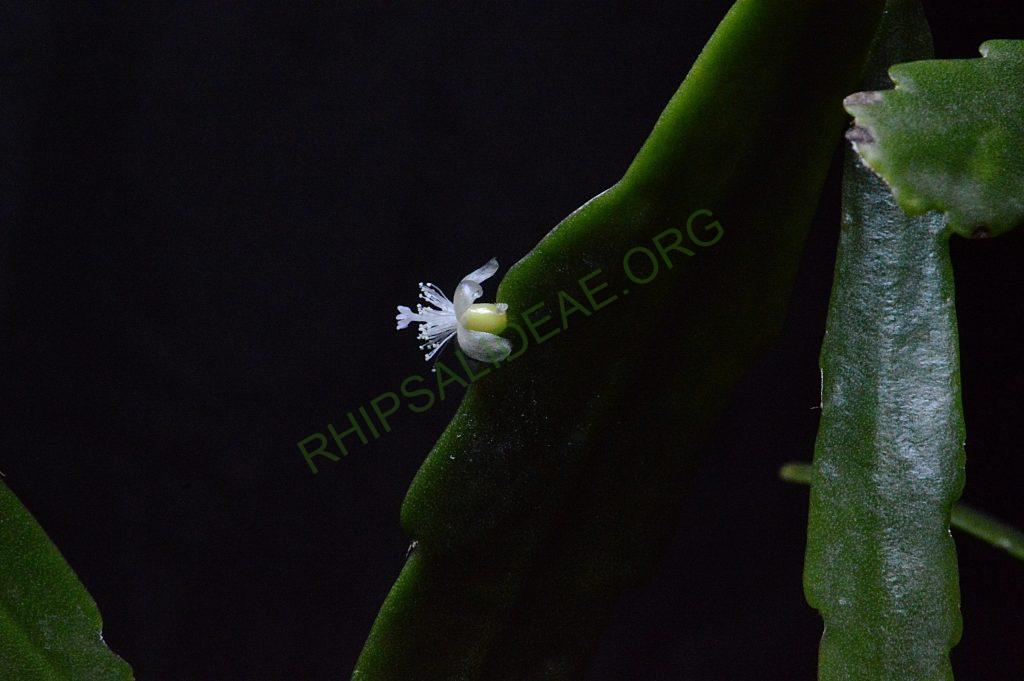
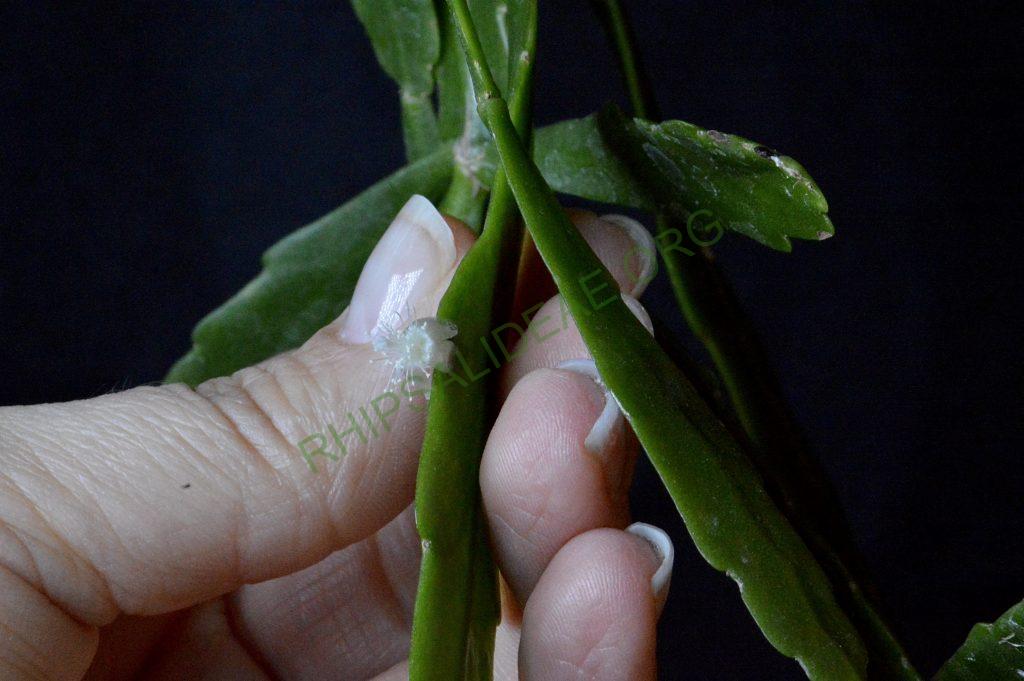
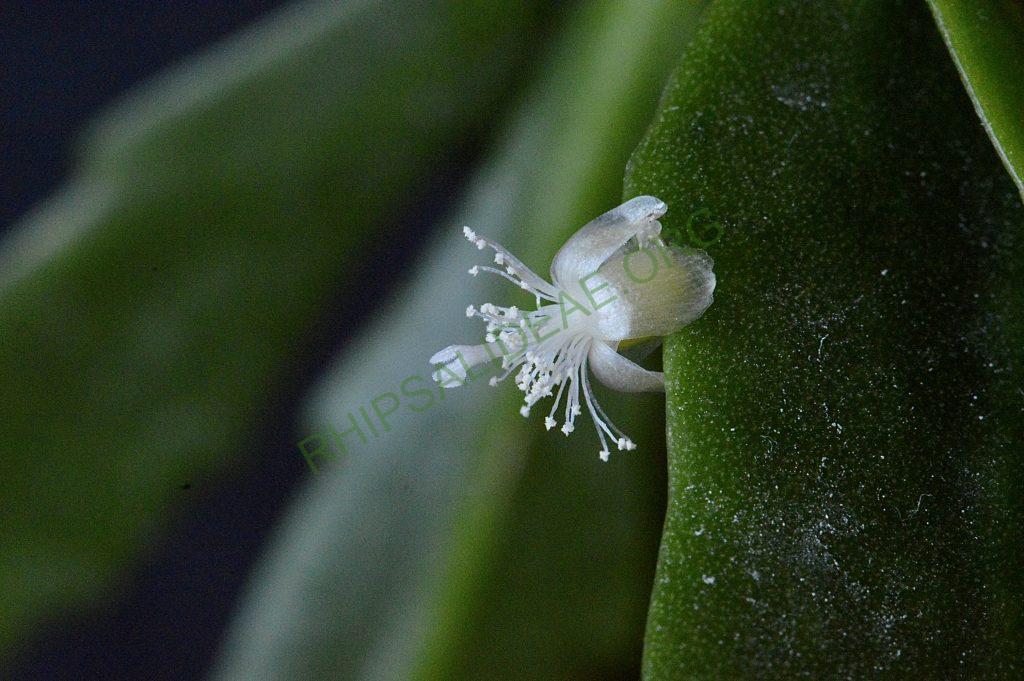
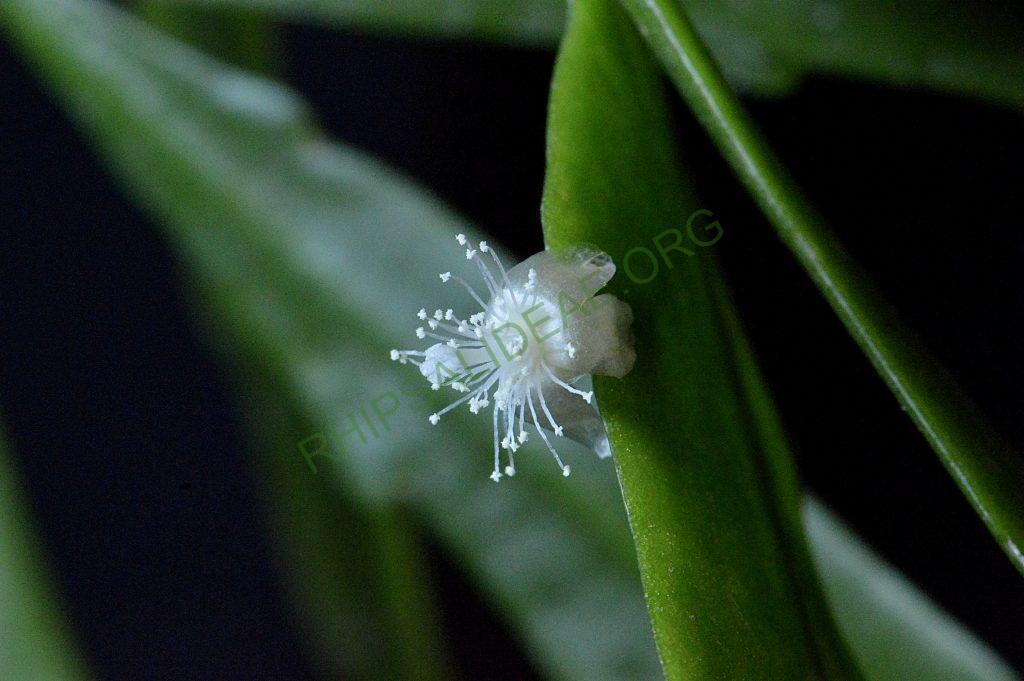


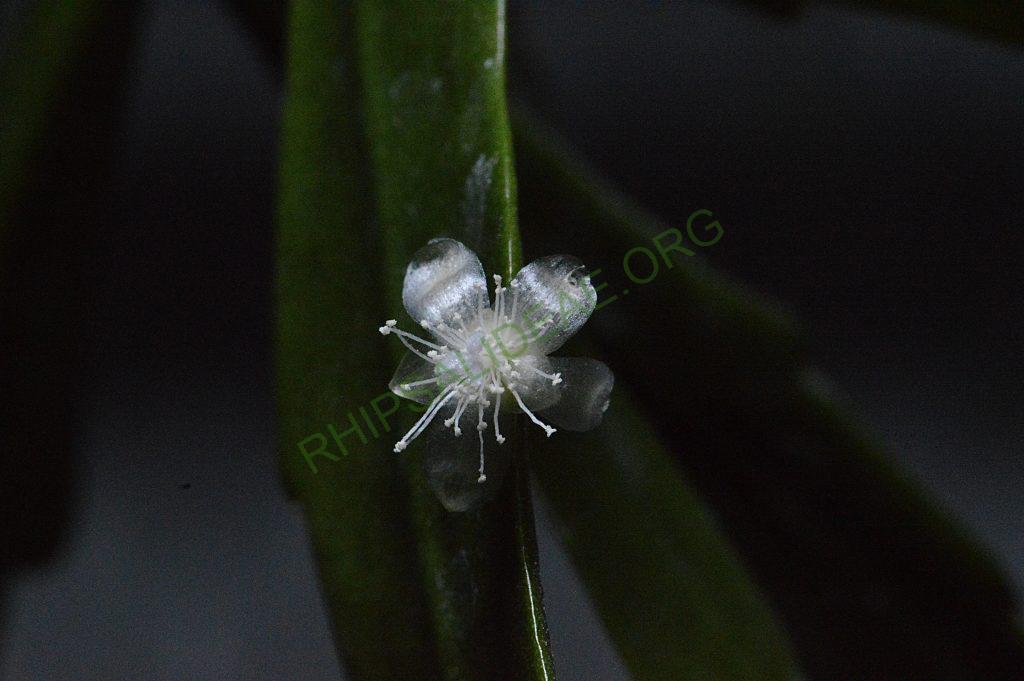


Description
| The accepted name Rhipsalis cuneata subsp. australis Ralf Bauer was published in EPIG 62: 26. 2008. The geographic range is Bolivia (Chaparre region) found at elevations of 200-700 meters with an endangered status of data deficient. Rhipsalis cuneata subsp. australis is classified in the subgenus Phyllarthrorhipsalis. Observed growing as an epiphyte. Overall habit is pendant, branches are monomorphic (single stem shape) and acrotonic or subacrotonic (stems form from the tips and just below tips of previous stems). Stems are 2 angled, margins have low crenations, rarely dentate (slightly scalloped, rarely serrated like holly ), bristles are absent. Main stems are determinate (seasonal growth is about the same length), 1.8cm-12cm x 0.4cm-2.4cm. Flowers are rotate: reflexed (wheel shaped: reflexed), unreported x 0.8cm. Petals from 5 to 7, sepals from 1 to 3. Inner petals are translucent-white, outer petals are white, cream, green or pink. Stamen are white, from 36 to 40. Stigma lobes from 3 to 5. Flower ovary is globose, obovoid or cylindrical, 0.2cm-0.4cm x 0.2cm. Flowering position on the stem is lateral and the flower orientation in relation to the stem is perpendicular. Does repeat flowering per areole. A maximum of 2 flowers were reported at a single areole. Areole position in the stems is superficial (flower ovary is visible on the surface of the stems during bud development). Trichomes or wool is absent at the areoles after flowering. Unripe fruit is green. Ripe fruit is globose; white, 0.7cm-0.9cm x 0.7cm-0.8cm. Other notable features: Stems are typically smaller and more narrow than R. cuneata subsp. cuneata. Fruit and flowers are similar having white fruit, inner stamen being shorter than outer stamen, elongated consistently wedge shaped at the base of the phylloclades, and small translucent predominantly white flowers. R. goebeliana grown under the right conditions can have a strong resemblance to R. cuneata subsp. australis, both species can at times present dentate margins. This characteristic is much less frequent in R. cuneata subsp. australis. The species are easily distinguished by their flowers, R. cuneata subsp. australis has very small predominantly white flowers while R. goebeliana has much larger often light-yellow or pink tinted flowers. R. cuneata subsp. australis also has dirty white fruit while R. goebeliana has green or greenish-white fruit. I have observed several photographs of R. goebeliana where the fruit appears white. Comments: P.L. Ibisch, M. Kessler, C. Nowicki and W. Barthlott, indicated specimen found growing at lower elevations in Bolivia were R. goebeliana, they have since however been treated as a R. cuneata subsp. australis by Ralf Bauer3. R. goebeliana specimen growing at higher elevations were also treated as R. cuneata subsp. cuneata3. R. goebeliana has not been found in the wild, any attribution of R. goebeliana found in Bolivia should be treated as R. cuneata subsp. cuneata or R. cuneata subsp. australis3. R. cuneata subsp. cuneata (Photo 8: R. cuneata subsp. cuneata) and R. cuneata subsp. australis (Photo 10: R. goebeliana) can be seen pictured on page 29 of Bradley 18. EPIG 62 contains several more photographs of R. cuneata subsp. cuneata (images from Ecuador and Peru should be regarded as R. occidentalis), R. cuneata subsp. australis, and R. goebeliana (only known from cultivated material). 1Rhipsalis cuneata Britton & Rose, eine variable Art mit flachen Trieben von den Ostabhängen der Anden Boliviens, Perus and Ecuadors - mit Beschreibung der neuen Unterart R. cuneata subsp. australis Ralf Bauer subsp. nov., Ralf Bauer, EPIG, 62:5-28, 2008 Taxonomic treatment and description were derived from:
|
Rhipsalis cuneata subsp. australis referenced publications
Reduced Synonyms
| Name | Reduced by | Published Date | Published In |
|---|